Six Bali Areas Directed to Low Emission Tourism, from Energy to Waste
DENPASAR, GARISBUMI.com – Using clean energy, environmentally friendly transportation and reducing single-use plastic are part of the direction of developing six low-emission areas in Bali. Through this policy, the Bali Provincial Government wants to link economic and tourism activities with environmental protection and the lives of local communities.
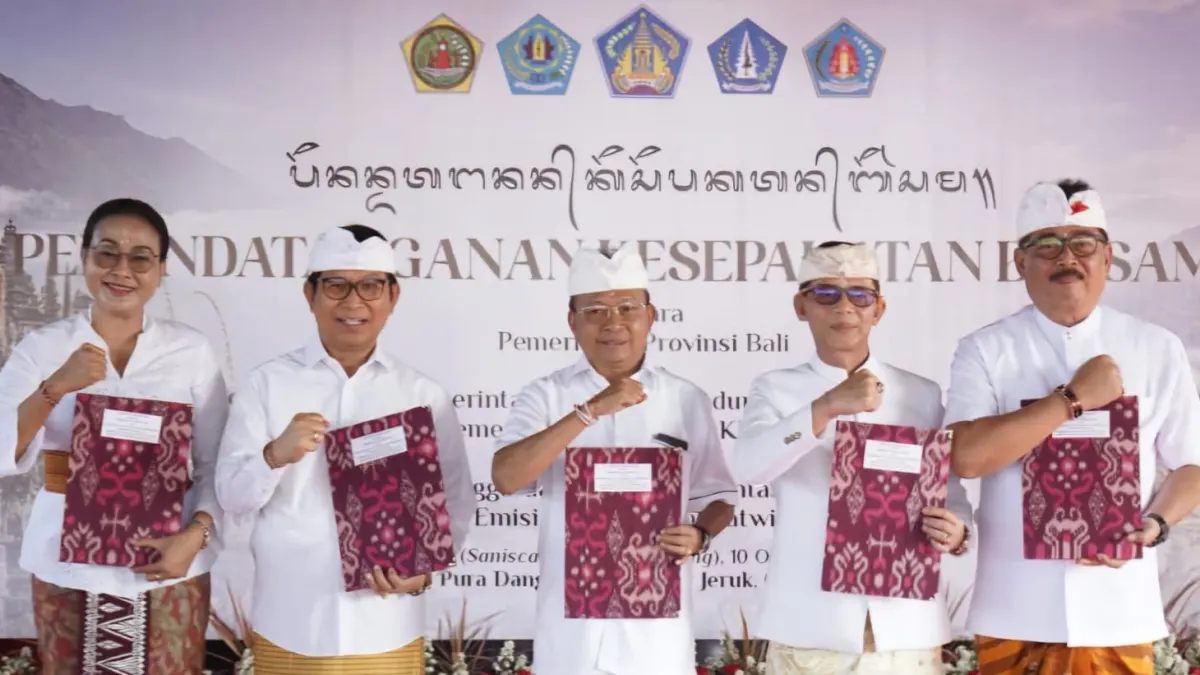
The six areas are Ubud, Nusa Penida Islands, Nusa Dua, Kuta, Sanur, and the Gajah Mada Cultural Heritage Area in Denpasar City. All of them were designated as Kerthi Bhumi Satwika Low Emission Areas through the Decree of the Governor of Bali Number 912/04-B/HK/2026 on 6 October 2026.
Its implementation was strengthened through a joint agreement for the 2026–2030 period which was signed at Er Jeruk Temple, Saturday (10/10/2026).
Bali Governor Wayan Koster stated that this policy was directed at maintaining a balance between economic growth, tourism and environmental sustainability.
"We must ensure that economic and tourism progress is balanced with environmental protection and the sustainability of people's lives," said Koster, as quoted from a statement from the Bali Provincial Government.

What will be developed in the six areas?
Each region has a development direction according to the character of the region. Ubud is focused on cultural and environmental-based tourism, while the Nusa Penida Islands are focused on protecting island and coastal ecosystems.
Nusa Dua, Kuta and Sanur are strategic areas for implementing environmentally friendly tourism practices. Meanwhile, the Gajah Mada Cultural Heritage Area is directed to combine the preservation of historical areas with sustainable urban development.
Artikel ini merupakan siaran pers resmi yang diterbitkan melalui Meja Redaksi GARIS BUMI. Materi telah melalui peninjauan editorial untuk kenyamanan dan kejelasan informasi bagi pembaca.
Share Your Thoughts Editorial Moderation Required