Four South Kalimantan Regions Receive IDR 473 Billion for Waste Management
JAKARTA, GARISBUMI.com – The LSDP program will finance the construction of waste processing facilities. Commission II DPR RI reminded regional governments to ensure that projects do not stall.
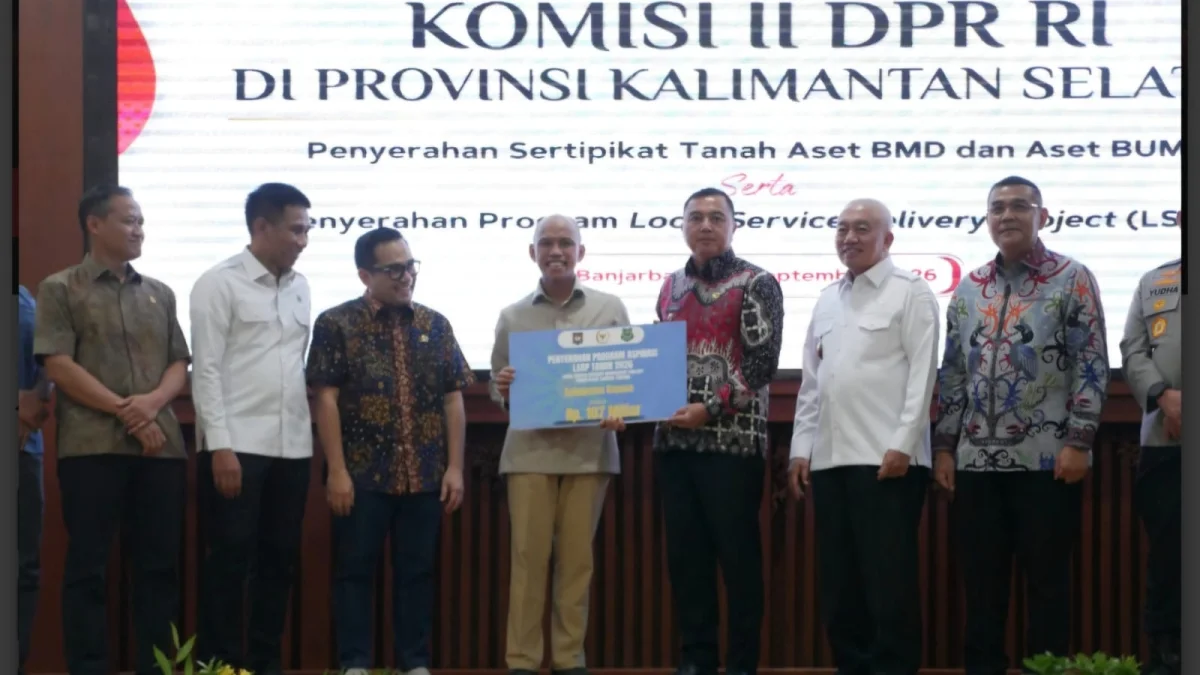
Four districts and cities in South Kalimantan received support worth IDR 473 billion through the Local Service Delivery Project or LSDP to strengthen waste management in the regions.
The four recipient areas for the first stage consist of Banjarmasin City with a value of IDR 157 billion, Banjarbaru City IDR 102 billion, Tanah Laut Regency IDR 107 billion, and Kotabaru Regency IDR 107 billion.
Support for this program was delivered during a series of specific visits by Commission II DPR RI at the Idham Chalid Building, South Kalimantan Provincial Secretariat Office, Banjarbaru, Wednesday, September 2 2026.
Chairman of Commission II DPR RI, Rifqinizami Karsayuda, said that LSDP was a program initiated by the Ministry of Home Affairs together with the Ministry of National Development Planning/Bappenas and the Ministry of the Environment with support from the World Bank.
The program is directed at improving basic services for district and city governments, especially in overcoming the waste problem which increasingly requires adequate facilities, technology and financing.
“We are asking our working partners in Commission II of the DPR RI not to rely solely on the APBN. "We convince many stakeholders in the world to be able to help Indonesia, one of which is the World Bank," he said. said Rifqinizami.
Apart from the four regions in South Kalimantan, the first phase of LSDP was also given to Bontang City and Kutai Kartanegara Regency in East Kalimantan (Kaltim) and Kapuas Regency in Central Kalimantan (Kalteng).
According to Rifqinizami, cleanliness issues must be handled seriously because they are directly related to environmental quality, public health and regional competitiveness.
“This LSDP program is intended to carry out waste management at the city district level,” he said.
Through this program, local governments are encouraged to add waste management facilities, including waste processing sites using the principle of reduce, reuse, recycle or TPS 3R and integrated waste processing sites or TPST.
Waste management is not only carried out centrally at the final processing site. Handling is also directed from communities, villages, sub-districts and other smaller areas so that the volume of waste can be reduced before it reaches the disposal site.
The waste that has been collected will be processed with the support of machines and technology to produce products that have both use and economic value.
“Then it is processed through machines and the results must be economically beneficial. "It can be used as material for making roads, fertilizer, and so on," he said. said Rifqinizami.
The next stage of the LSDP program is planned to target four other districts in South Kalimantan, namely Hulu Sungai Tengah, Hulu Sungai Selatan, Barito Kuala and Banjar. The distribution is targeted to take place in the next two to three months after the regions fulfill the program requirements.
In the initial stage, LSDP was prioritized for districts and cities with waste generation between 100 and 500 tons per day.
Meanwhile, regions that handle larger amounts of waste will be directed to obtain programs on a different scale. One of them is the Banjarbakula Regional TPA which serves areas across districts and cities.
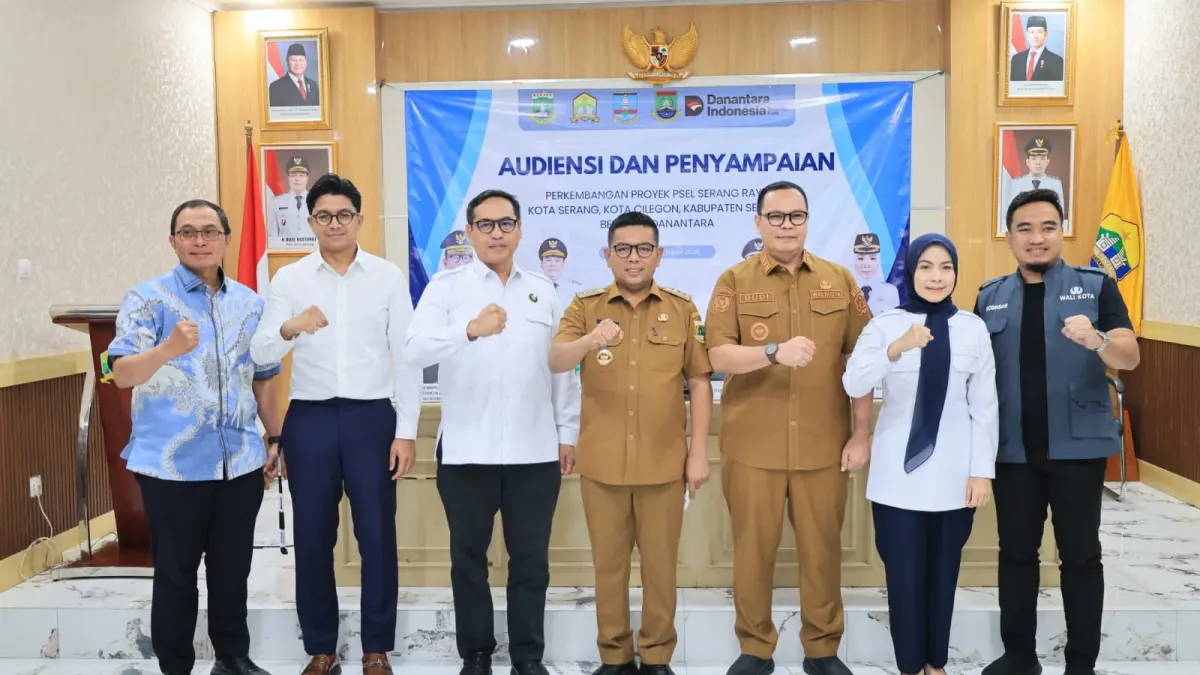
According to Rifqinizami, the development of large-scale facilities will be encouraged together with the Ministry of Home Affairs and Danantara with an orientation towards utilizing waste into electrical energy.
"If it's more than that, for example the province has a provincial TPA, Banjarbakula, then we will provide a bigger program together with the Ministry of Home Affairs and Danantara so that it can become a source of electrical energy," he said.
In the midst of the large amount of financial support, Commission II DPR RI asked the recipient regional governments to maintain accountability for program implementation. Funds will be transferred directly to the relevant regional apparatus, while the central government carries out guidance and supervision functions.
Rifqinizami reminded that the facilities built should be properly used and maintained after the project is completed. The large budget will not solve the problem if the TPS 3R and TPST that were built do not operate.
“Don't let this hundreds of billions of money become a discovery in the future. Existing projects, TPST, TPS 3R, must not be stalled. "We want our culture of cleanliness to change," he said. he stressed.
The sustainability of LSDP will depend on the readiness of local governments to fulfill provisions, manage budgets responsibly, and ensure facilities provide benefits. Other regions can also propose similar programs for the next stage.
Source: South Kalimantan Provincial Government Media Center.
Share Your Thoughts Editorial Moderation Required