
Mangroves for COP31 Delegates' Carbon Footprint, Results Need to Be Proven
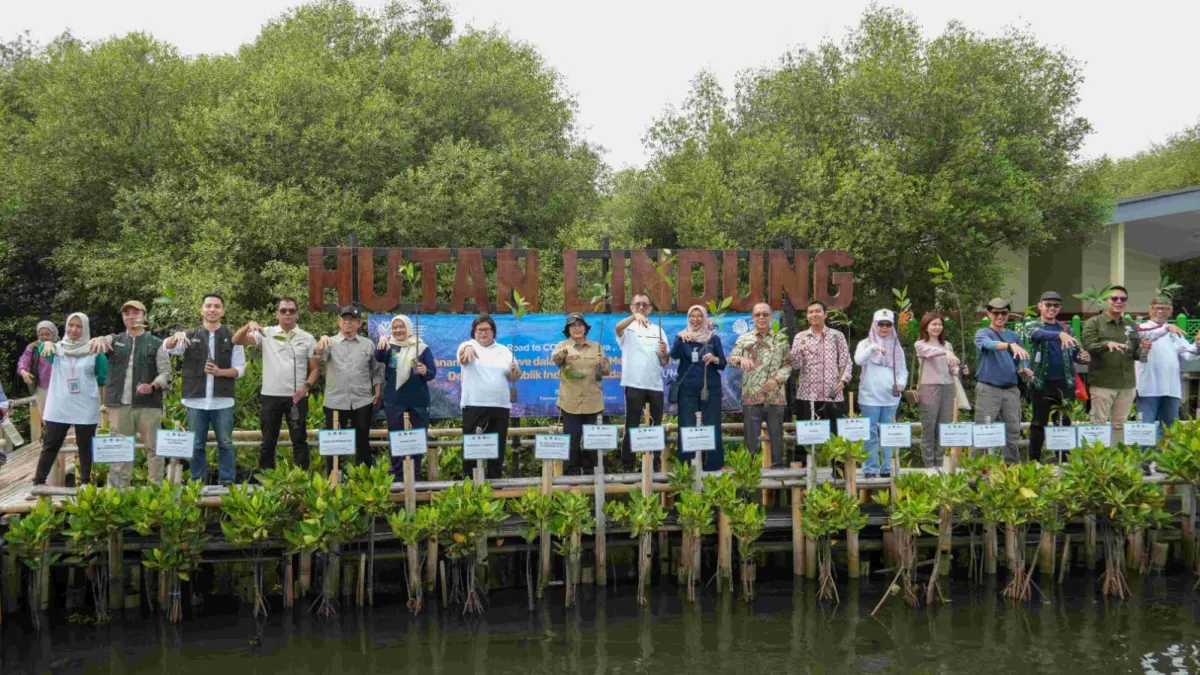
JAKARTA, GARISBUMI.com – The invitation to plant mangroves to offset emissions from the Indonesian delegation's trip to COP31 brings up an important question: how to ensure that the trees planted survive and absorb carbon according to calculations?
The Ministry of the Environment/Environmental Control Agency (KLH/Environmental Management Agency (BPLH)) held this action in the Angke Kapuk Protected Forest on October 30 2026. In a statement a day later, the ministry invited delegates to calculate and compensate for their flight emissions.
COP31, the United Nations climate change conference, is scheduled to take place in Antalya, Türkiye, on 9–20 November 2026. This forum brings together countries to discuss handling the climate crisis.
Why do tree numbers need to be read carefully?
According to KLH/Environmental Management Agency (BPLH) estimates, round-trip Jakarta–Istanbul–Antalya flights produce around 1,010 kilograms of CO₂ per economy class passenger and 3,098 kilograms of CO₂ for business class.
The ministry uses an absorption assumption of 25 kilograms of CO₂ per tree per year for 10 years, or a total of 250 kilograms. Based on that assumption, the release states that five trees are needed for economy passengers and 12-13 trees for business.
Arithmetically, dividing emissions with absorption assumptions produces 4.04 trees for the economy and 12,392 trees for business. If rounded up, the requirement becomes five and 13 trees.
Share Your Thoughts Editorial Moderation Required