
Carbon-Based Photocatalysts Study to Break Down Industrial Wastewater Pollutants
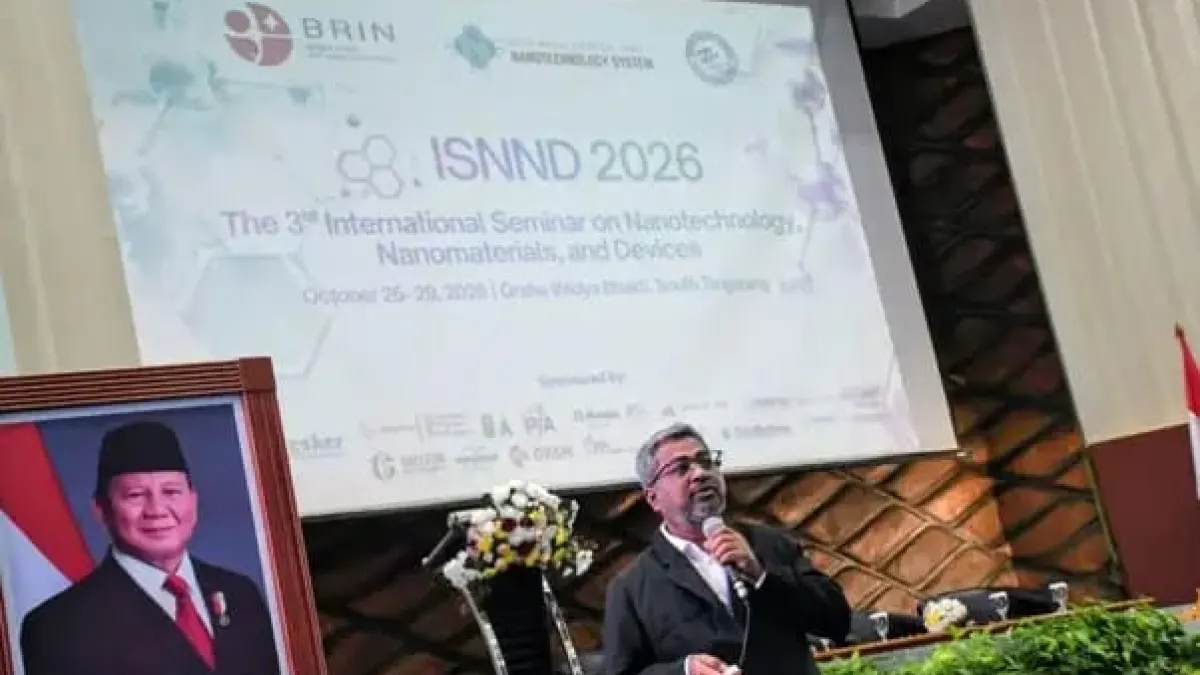
GARISBUMI.com – SERPONG, GARISBUMI.COM | Carbon-based materials are being studied to help break down wastewater pollutants that are difficult to treat through conventional processing. Through photocatalysis technology, light energy is used to activate catalysts and trigger reactions to decompose polluting compounds.
However, this potential does not mean that the technology is ready to be widely applied in industry. Effectiveness against various pollutants, energy requirements, operational costs, and safety of materials and processing results still requires further research.
This was conveyed by Prof. Suresh Sagadevan from Universiti Malaya, Malaysia, at The 3rd International Symposium on Nanotechnology and Nanomaterials for Development (ISNND) 2026 held by BRIN in the B.J. Science and Technology Area. Habibie, Serpong, Wednesday (28/10/2026).

According to Suresh, waste from the textile industry, pharmaceuticals, agriculture and domestic activities can contain pollutants that are difficult to remove using conventional methods. One example is textile dyes with complex organic compound structures.
How does photocatalysis decompose pollutants?
Photocatalysis utilizes light energy to activate the catalyst material. This process produces reactive species that help break down polluting compounds in water.
Under appropriate conditions, organic compounds have the potential to break down into simpler compounds, including carbon dioxide and water. However, the results depend on the characteristics of the catalyst, the type of pollutant, and the processing conditions.
Artikel ini merupakan siaran pers resmi yang diterbitkan melalui Meja Redaksi GARIS BUMI. Materi telah melalui peninjauan editorial untuk kenyamanan dan kejelasan informasi bagi pembaca.
Share Your Thoughts Editorial Moderation Required