97.76 Percent of Waste in Papua Has Not Been Managed, KLH Encourages Sorting from Source
SORONG, GARISBUMI.com – The waste problem in the Papua region is still facing big challenges. Of the waste generation which reaches 2,625 tons per day, around 97.76 percent has not been managed optimally. Most of the waste pollutes the environment, while the rest is disposed of at the final processing site using an open disposal system or open dumping.
The Ministry of the Environment/Environmental Control Agency (KLH/Environmental Management Agency (BPLH)) through the Papua Environmental Control Center (Pusdal LH) is encouraging the acceleration of waste management by strengthening sorting and processing from the source.
This approach is needed to achieve the national target of 100 percent managed waste by 2029 as well as stopping the practice of open dumping in the Papua region.
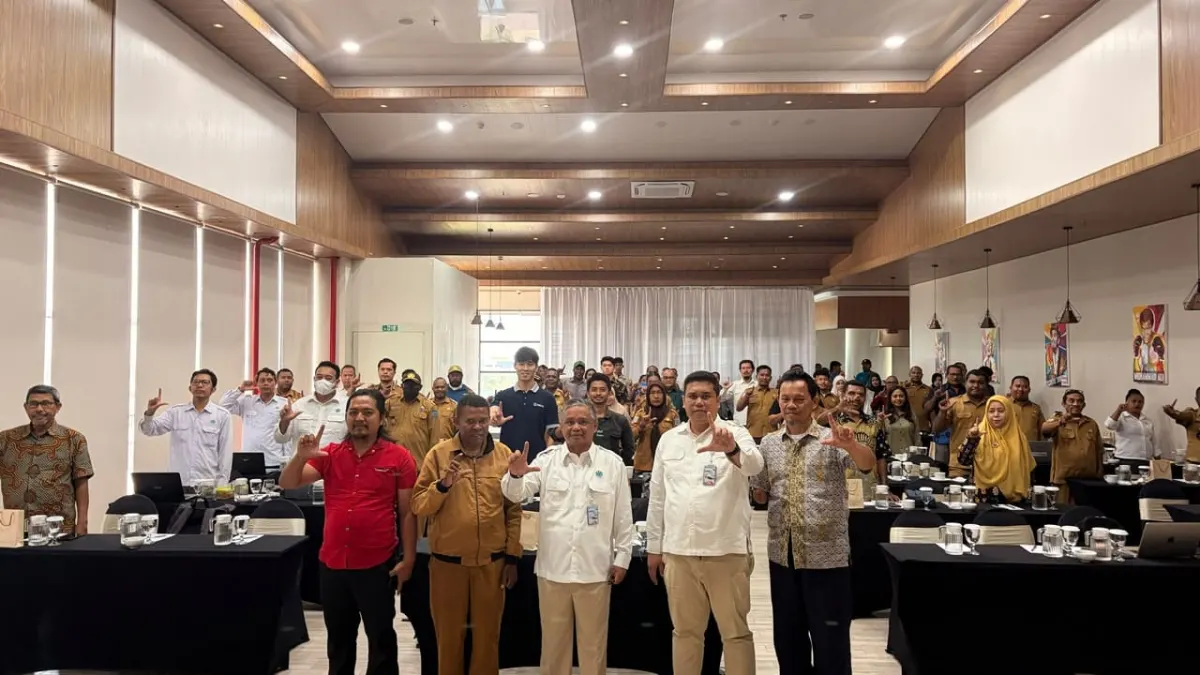
These efforts were discussed in a cross-sector coordination forum that brought together the government, business actors, academics and communities in Sorong City, Southwest Papua, Tuesday (22/9/2026).
Head of Pusdal LH Papua, Abdul Muin, said that waste management must be placed as one of the pillars of regional development because it is directly related to public health, environmental quality and ecosystem sustainability.
According to him, the old pattern of relying only on transporting and disposing of waste must be abandoned immediately.
"We need to place waste management as one of the important regional development agendas because it is directly related to environmental quality, public health, cleanliness and sustainable development," said Abdul Muin.
"Waste can no longer be seen as simply being transported and thrown away, but must be managed comprehensively from source to final processing," he continued.
Only 59 tons of waste is handled per day
Based on data from the National Waste Management Information System (SIPSN), waste generation in the Papua region reaches around 2,625 tons per day. Of this amount, only around 2.24 percent or 59 tonnes per day has been handled.
Meanwhile, around 2,566 tons of waste per day or 97.76 percent has not been managed optimally. Around 74.43 percent of waste is not handled and has the potential to pollute the environment, while 23.33 percent ends up in landfills which still implement an open dumping system.
Infrastructure limitations magnify this problem. Of the 42 districts and cities in the Papua region, only 23 regions have TPAs. All facilities are still operating with an open dumping system.
Meanwhile, 19 other districts and cities do not yet have final waste processing facilities.
KLH/Environmental Management Agency (BPLH) assesses that this condition cannot be resolved simply by building or expanding a landfill. Improvements must start from reducing waste and sorting it at the household, market, school, office and other public facilities.
TPA is only for storing residue
To improve waste management, KLH/Environmental Management Agency (BPLH) encourages tiered handling from upstream to downstream.
Upstream, waste sorting must be strengthened starting from households, markets, educational facilities and offices. In the middle, local governments need to optimize waste banks, composting, waste processing sites using the 3R principles, and recycling centers.
Meanwhile, downstream, TPA may only be used to accommodate residue that cannot be utilized or reprocessed.
Management from the source is also directed at building a circular economic ecosystem. Organic waste can be processed into compost or maggot feed around the landfill site so that not all of it has to be transported to the landfill.
Inorganic waste that has economic value can be collected and distributed through partnerships with local managers, such as PT Milion Limbah Papua and other companies that absorb recycled products.
Local partnerships are considered important because the costs of sending recycled materials from Papua to other regions are relatively high.
Mariat Gunung Landfill is Almost Full
In Sorong Regency, the regional government is accelerating the end of the open dumping system at the Mariat Gunung landfill. The 81,772 square meter landfill is reportedly almost full.
The Sorong Regency Government has begun to cover the waste piles in stages using layers of soil. Leachate control is also carried out to reduce the risk of contamination of soil and water sources around the landfill.
Apart from improving the TPA, the regional government continues to strengthen waste processing sites using the principles of reduce, reuse, recycle or TPS3R. This facility is expected to reduce the volume of waste taken to the landfill.
KLH/Environmental Management Agency (BPLH) emphasized that solving the waste problem in Tanah Papua cannot be placed solely on the regional government. Collaboration between the government, business world, society, universities, communities and waste managers is needed to address geographical challenges and high operational costs.
Without reduction and processing from the source, limited final processing facilities will continue to increase the risk of environmental pollution on Bumi Cenderawasih.
Share Your Thoughts Editorial Moderation Required