Sobirin and Waste Returned to IDR 464 Million for Residents
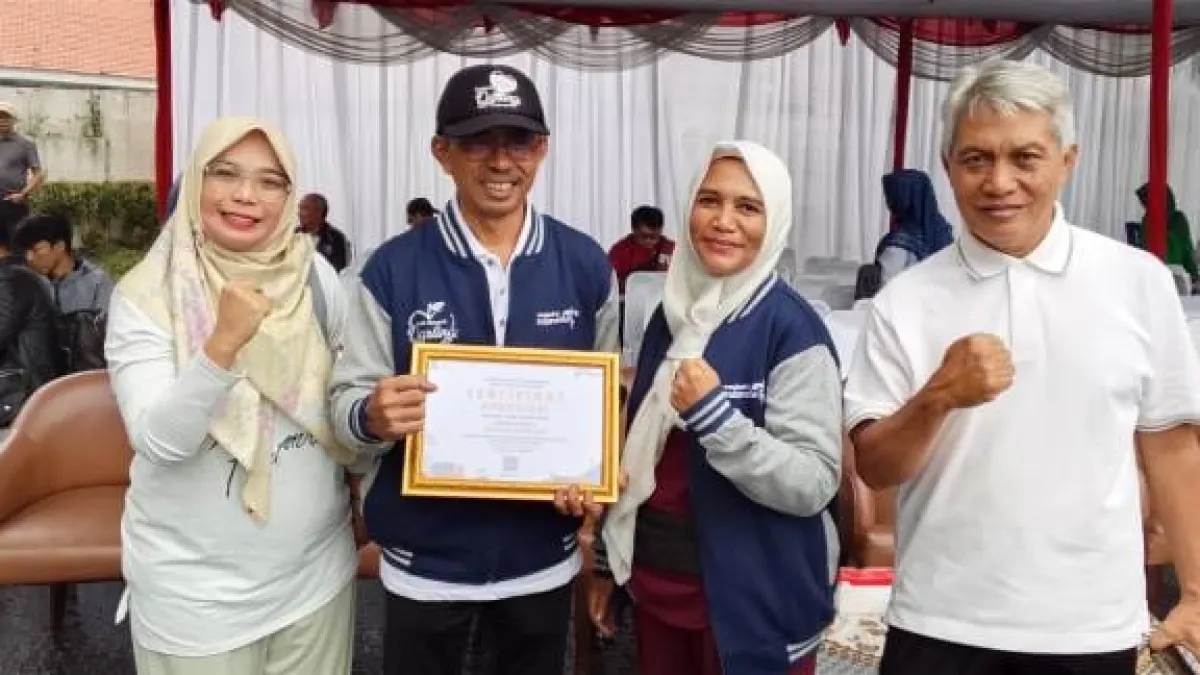
GARISBUMI.com – In Darling Village, waste does not always end up in the landfill. Plastic bottles, cardboard, cans and various inorganic items that are usually considered useless are actually sorted, weighed, and then returned for their value to residents.
The change didn't happen overnight. There is a long process to convince the public that sorting waste from home is not a waste of work. Behind this movement, there is Sobirin, a figure who since 2020 has been diligently mobilizing the Environmentally Conscious Waste Bank or Darling.
When the movement started, the amount of waste collected had only reached 1,197 kilograms. This figure may seem small when compared to a city's waste generation. However, for Sobirin and the residents of Kampung Darling, this amount is the starting point for building new habits.
House after house they started to separate their waste. Inorganic items that were previously mixed with food waste began to be collected separately. Waste is no longer viewed solely as something that must be thrown away immediately, but as material that still has value.
Slowly, the habit grew. The number of residents participating increases, as does the volume of waste that is successfully managed.
Until 2025, the Darling Waste Bank has managed 161,794 kilograms or almost 162 tons of inorganic waste. This waste does not end up piling up in landfills, but rather goes back into the utilization chain.
From this management, an economic value of IDR 464,723,363 has been returned directly to the community.
"This award is not just a personal achievement, but proof that people's awareness in sorting waste from their homes has produced real results," said Sobirin.
Starting from Citizen Awareness
For Sobirin, the main strength of the Darling Waste Bank lies not in the building, the weighing equipment, or the amount of money generated. The real strength lies in the habits of residents who are willing to sort waste from home.
Source separation is an important part of waste management. When organic and inorganic waste has been separated, the material that can still be used is not contaminated by food scraps or other household waste.
This simple method makes inorganic waste easier to collect, weigh and distribute for recycling.
However, building new habits is not an easy matter. Citizens must be assured that every bottle, carton and packaging they part with has a greater impact than just the dollar value.
The impact can be seen from the growth of waste management at the Darling Waste Bank during the period 2020 to 2025. From 1,197 kilograms in the first year, the amount of waste managed continues to increase until it reaches more than 50,000 kilograms in 2025.
In the same year, the collected waste generated an economic value of around IDR 134.2 million. This figure is the highest achievement since the Darling Waste Bank started operating.
Behind these numbers is increasingly widespread citizen participation. Waste that was previously thrown away is now collected because it has value. The environment becomes better protected, while the community receives direct economic benefits.
"We want to make this action of caring for the environment a lifestyle. Through the waste bank, residents not only help the government reduce the burden on landfills, but also get direct economic benefits," said Sobirin.
Not Just Collecting Trash
What Sobirin and the residents of Kampung Darling did shows that the waste bank is not just a place to deposit used goods.
More than that, the waste bank becomes a shared learning space. Residents learn to recognize types of waste, understand the value of materials that have been thrown away, and see the relationship between household habits and broader environmental problems.
Every piece of waste that is successfully diverted from landfill means a reduction in the volume of material that must be transported and landfilled. In the long term, this habit will help reduce the burden on government waste management.
The Darling Waste Bank also shows that economic benefits and environmental concerns can go together. Residents are not only asked to maintain cleanliness, but also get real results from the waste they sort.
The economic value of almost half a billion rupiah returned to residents over five years is proof that community-based waste management is not just a symbolic activity. If managed consistently, waste can become part of a circular economy at the village level.
Appreciation for the Movement from the Village
The journey of Sobirin and the residents of Kampung Darling received recognition from the Tangerang City Government on the occasion of National Waste Awareness Day 2026.
Through Certificate of Appreciation Number 3485 of 2026, the Tangerang City Government awarded Sobirin for his dedication to developing community-based waste management.
For Sobirin, the award does not belong to him alone. This appreciation is a gift for all residents who have tried to maintain consistency for five years, starting from sorting waste at home to handing it over to the waste bank.
This award also shows that environmental change does not always have to start with large programs and expensive technology. Change can grow from simple habits that are carried out continuously.
From one village, Sobirin and Darling residents show that waste can have different journeys. Waste doesn't always have to end up as an environmental burden. In the hands of people who care, waste can once again become a source of benefit.
They have saved almost 162 tons of waste from possibly ending up in a landfill. More than IDR 464 million has been returned to residents. However, the most important achievement is perhaps not just these numbers.
Their biggest achievement was growing the habit of no longer just throwing everything away.
Artikel ini merupakan siaran pers resmi yang diterbitkan melalui Meja Redaksi GARIS BUMI. Materi telah melalui peninjauan editorial untuk kenyamanan dan kejelasan informasi bagi pembaca.
Share Your Thoughts Editorial Moderation Required