
Maintaining Carbon Sovereignty, Government Prepares Smart Book and Emission Limits
BOGOR, GARISBUMI.com – The government is strengthening national carbon trading governance to prevent Indonesia from being disadvantaged in global carbon market competition. The two instruments prepared are a carbon smart book and setting emission limits for business actors.
Minister of the Environment/Head of the Environmental Control Agency (LH/Environmental Management Agency (BPLH)) Moh Jumhur Hidayat emphasized that the government must master the carbon trading road map as a whole. This control is considered important to protect Indonesia's interests and sovereignty from various loopholes in global carbon transactions.
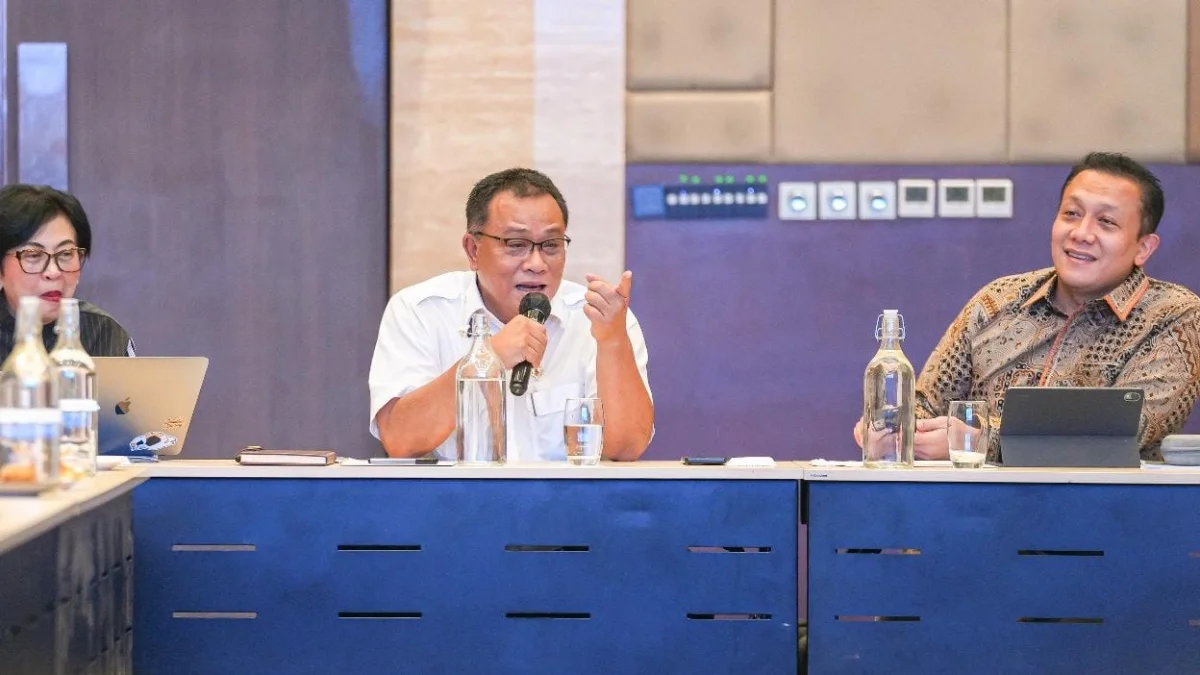
Jumhur conveyed this assertion while leading a strategic discussion at the Technical Guidance for the Implementation of Carbon Economic Value in Bogor, Tuesday, September 1 2026.
According to him, knowledge about carbon trading should not only be controlled by officials at the ministerial level. Regional governments, from governors to regents, must have the same understanding, because they deal directly with business actors in their respective regions.
“The governor, the regent also wants to know what carbon trading actually is,” Jumhur said.
Edit
Government Prepares Carbon Smart Book
Edit
To equalize the understanding of central and regional government officials, Jumhur instructed the preparation of a carbon smart book.
This practical guide will contain an explanation of the terms, regulations, actors, mechanisms and governance of carbon trading. All material will be presented in clear language so that it is easy for local governments to understand and apply.
“We have to know everything. "We must not fail in knowledge because if we fail, we can be cheated," he said. he stressed.
It is hoped that this smart book can be a guide for local governments when providing explanations, services and certainty to the business world involved in implementing the economic value of carbon.
Strengthening knowledge is also needed so that the government has a strong bargaining position and is able to ensure that every carbon transaction provides benefits for the national interest.
Edit
Emission Limits Are the Foundation of carbon trading
Edit
Apart from increasing the understanding of the apparatus, the government is preparing technical regulations to operate the domestic carbon market.

Jumhur said that setting a maximum emission limit or cap is the main foundation in the emissions trading mechanism. Without clear boundaries, carbon trading has no benchmark and is difficult to implement effectively.
In the cap and trade scheme, the government sets a limit on the emissions that each company can produce. Companies that produce emissions exceeding the limit are required to purchase carbon quotas or units from other companies that are able to reduce their emissions below the limit.
As an illustration, if a company gets an emissions quota of 100 units, but produces 150 to 200 units, the excess emissions must be compensated. The company is obliged to buy carbon units from other entities that have a surplus because its emissions are below the quota.
“Emissions trading is cap and trade. We set limits, then companies whose emissions exceed the limits buy from companies that are below the limits. "If it's not specified, it can't work," he said. explained Jumhur.
Edit
Carbon Markets Must Reduce Emissions
Edit
Determination of emission limits will be formulated through coordination across ministries and institutions. The government must ensure that these limits are set precisely, measurably and in accordance with the characteristics of each business sector.
With strict regulations, it is hoped that the domestic carbon market will not only be a place for buying and selling carbon units. This mechanism must function as an emission control instrument that encourages the business world to improve environmental governance and shift towards low-carbon economic activities.
The government also wants to ensure that carbon trading provides economic benefits to Indonesia without reducing environmental integrity or threatening the country's sovereignty over national carbon potential. (ed)
Share Your Thoughts Editorial Moderation Required