
Pursuing 6 Percent Growth by 2027, Government Spurred Green Energy and Digitalization
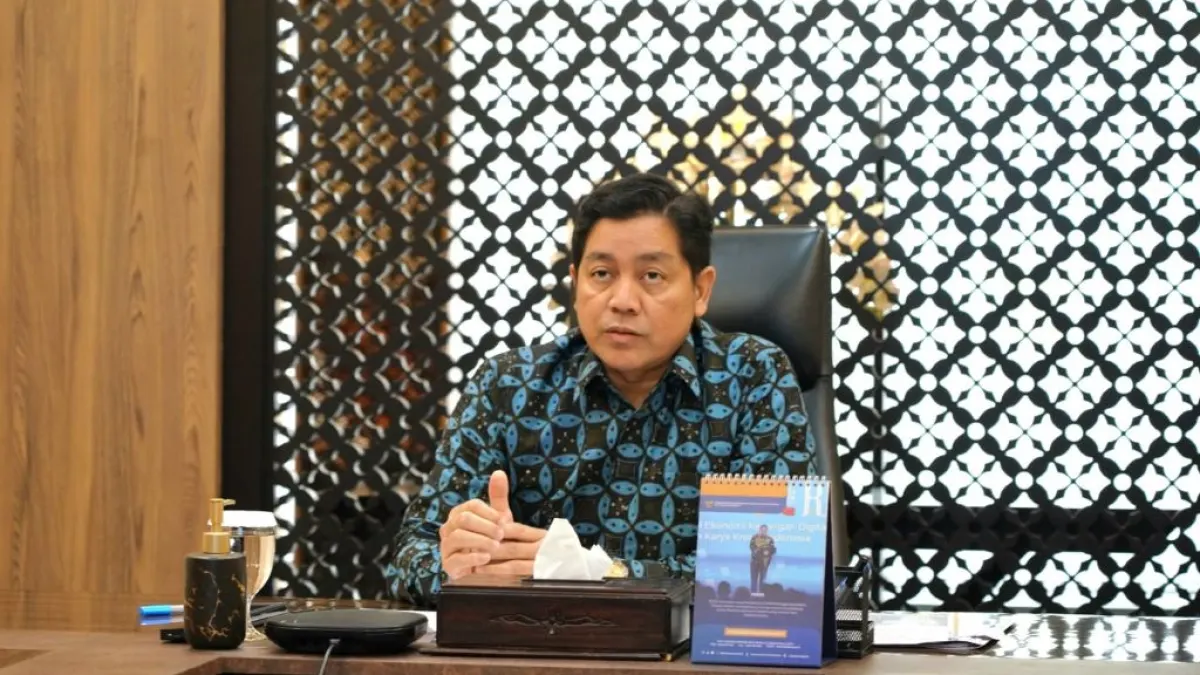
JAKARTA, GARISBUMI.com – The government places green energy and digitalization as the two main drivers to pursue 6 percent economic growth by 2027. The availability of affordable clean energy and digital infrastructure is considered important to attract investment while meeting the electricity needs of industry and data centers.
Spokesperson for the Coordinating Ministry for Economic Affairs, Haryo Limanseto, said that achieving this target requires national investment growth of 8-9 percent, with capital investment requirements of around IDR 2,218 trillion to IDR 2,258 trillion.
"The government is committed to orchestrating the energy transition and digital development as twin engines to drive sustainable economic growth," said Haryo in a written statement, Sunday (4/10/2026).
According to him, these two sectors need to be developed in an integrated manner so that Indonesia has an investment climate that is able to compete globally.
"The synergy between the availability of affordable clean energy and the acceleration of digital infrastructure is the main key to creating a globally competitive investment climate while accelerating the achievement of long-term growth targets," he said.
Electricity needs are projected to continue to increase
The Coordinating Ministry for the Economy said that Indonesia's electricity needs are projected to reach 700–800 terawatt-hours (TWh) by 2030. This increasing need demands a reliable electricity supply, including to support industrial growth and data centers.
The government links meeting this need to President Prabowo Subianto's direction to increase renewable energy-based generating capacity to 100 gigawatt peak (GWp).
The acceleration of the energy transition is also supported by the construction of a 47,758 circuit-kilometre transmission network. This infrastructure is directed to support the reliability of electricity supply.
In terms of equitable access, the Village Electricity program is targeted to reach 4,390 locations by 2026. The Coordinating Ministry for the Economy said the program will reach 1,505 locations by 2025.
Mineral Downstreaming Becomes an Opportunity for Green Industry
The government also sees opportunities for developing a green economy through downstream mineral resources, including nickel, tin, bauxite and copper. The use of clean energy in mineral processing is expected to increase added value while supporting the energy transition.
One of the sectors of concern is the electric vehicle ecosystem. According to the Coordinating Ministry for Economic Affairs, the development of this sector has the potential to provide up to 67-fold added value, with global demand projected to reach US$5.91 trillion by 2045.
Apart from critical minerals, the potential of silica sand as raw material for solar panels is considered to strengthen Indonesia's position in the global supply chain.
The Coordinating Ministry for the Economy said this potential attracted partnership interest from the European Union, the United States and Canada for the development of energy transition technology and diversification of critical mineral supply chains.
Financing and Manpower Prepared
To support the development of green industry, the government encourages the use of green bonds and blended finance. Support is also sought through the Just Energy Transition Partnership (JETP) and the Asia Zero Emission Community (AZEC).
These financing measures are aligned with workforce preparation through expanding the College Graduate Internship Program and vocational programs.
Haryo said that the development of green energy and digitalization opened up opportunities for Indonesia to strengthen its role in the global energy transition.
"Through innovative financing schemes and preparing quality human resources, the Government is optimistic that the green economy sector can accelerate the achievement of the net zero emissions target while creating new quality jobs," he said.
Artikel ini merupakan siaran pers resmi yang diterbitkan melalui Meja Redaksi GARIS BUMI. Materi telah melalui peninjauan editorial untuk kenyamanan dan kejelasan informasi bagi pembaca.
Share Your Thoughts Editorial Moderation Required