Emil Salim's Legacy: Knowledge, Integrity and the Future of Indonesia's Environment
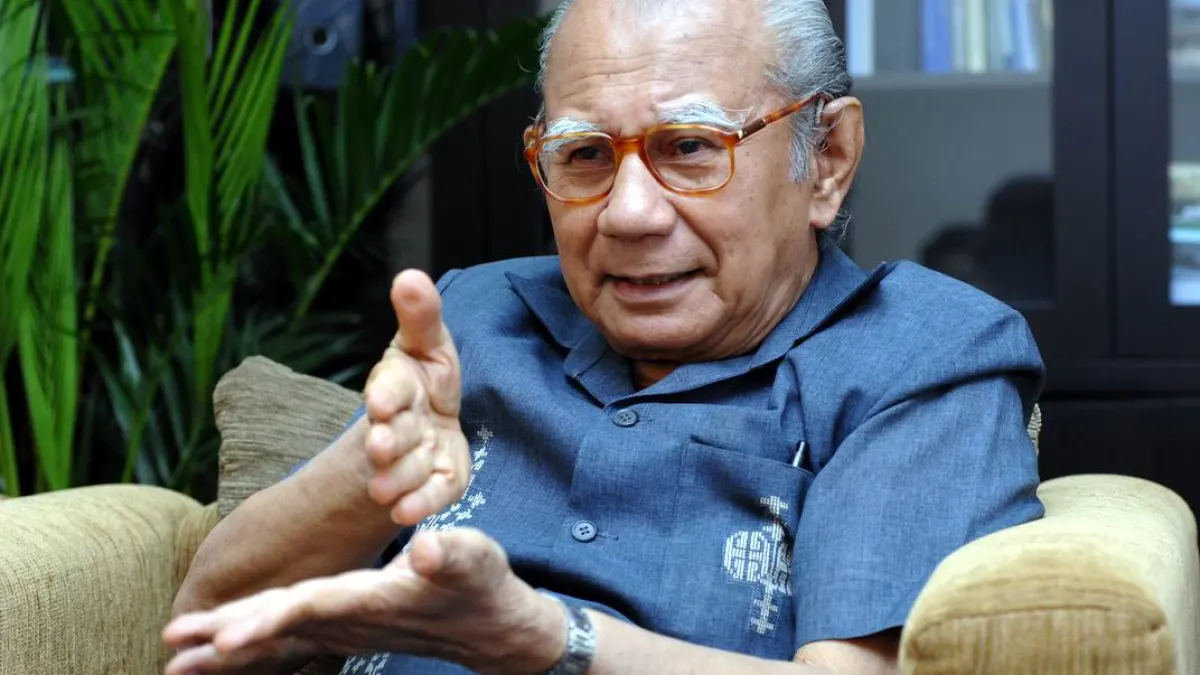
GARISBUMI.com – Emil Salim's position in the cabinet ended in 1993. However, the debate about the relationship between development and the environment that he has been voicing continues to take him to other spaces, including international forums that assess the impact of the oil, gas and mining industry.
He no longer has the authority to sign policies. Even so, his experience and thoughts are still sought after when governments, international institutions and civil society face the same question: who gets the benefits of development, and who bears the costs?
Assessing Extractive Industries Closely
In 2001, Emil Salim was appointed to lead the Extractive Industries Review (EIR), a study of the World Bank Group's involvement in the oil, gas and mining sectors. The process involves consultation with government, industry players, civil society and residents affected by the project. The final report was published in December 2003.
The problem studied is not simple. Extractive industries provide energy, raw materials, jobs and state revenues. However, the same activities can cause pollution, damage ecosystems and trigger conflict if people's rights are ignored.
Through this study, Emil again faced problems that had long accompanied his work in Indonesia. Investments and state revenues need to be calculated, but so do their impacts on the environment, citizens' lives, and efforts to reduce poverty.
The measure of development success, thus, does not stop at how much natural resources can be extracted. The next question is whether the community around the project will enjoy the benefits and still have a decent place to live after the project runs.
Classroom Integrity and Policy
Emil Salim takes on many roles: economist, minister, academic and environmental thinker. These roles brought him into contact with interests that did not always align. On the one hand there is a need to build. On the other hand, there is the reality about the limits of nature's capabilities and the impacts borne by society.
In a tribute event announced at the University of Indonesia's School of Environmental Sciences in 2025, his son, Roosdinal Salim, mentioned integrity as an important value that Emil taught the family. SIL UI also awarded him the Lifetime Achievement Award for his contribution to environmental science and sustainable development.
This value provides a way to read Emil's journey. Knowledge about environmental damage will mean little if it stops in reports or lecture halls. It needs to be brought into policy debates, including when scientific findings make development decisions more difficult.
Old Ideas, Closer Problems
Today, environmental issues are present in everyday life. Flooding disrupts school and work. Air pollution adds to the health burden. Soil damage makes things difficult for farmers, while water crises can stop household and industrial activities.
At the same time, Indonesia needs energy, food, housing and jobs. The need is real. Likewise, costs arise when development ignores natural carrying capacity.
This is where Emil Salim's thoughts remain relevant. Protecting the environment is not a job that is placed after economic targets have been achieved. Environmental damage itself can erode development results: budgets are absorbed to recover from disasters, productivity decreases, and residents lose their source of livelihood.
The younger generation is now familiar with the terms climate change, clean energy, green economy and sustainable development. These terms are easy to find in speeches and reports. The test is in more concrete decisions: how projects are designed, risks are calculated, citizens are heard, and damage is prevented.
Emil Salim did not leave Indonesia free from environmental problems. It abandons knowledge, institutions, and ways of asking questions before a decision is made. When development is said to bring progress, we need to ask: progress for whom, at what cost, and how long can it last?
That is a legacy that can still be used to protect the earth.
Share Your Thoughts Editorial Moderation Required
Mantab teruslah berkarya semoga menjadi amal ibadah