
Female Tapir Trapped in Mesuji Oil Palm Plantation Canal, Evacuated by BKSDA
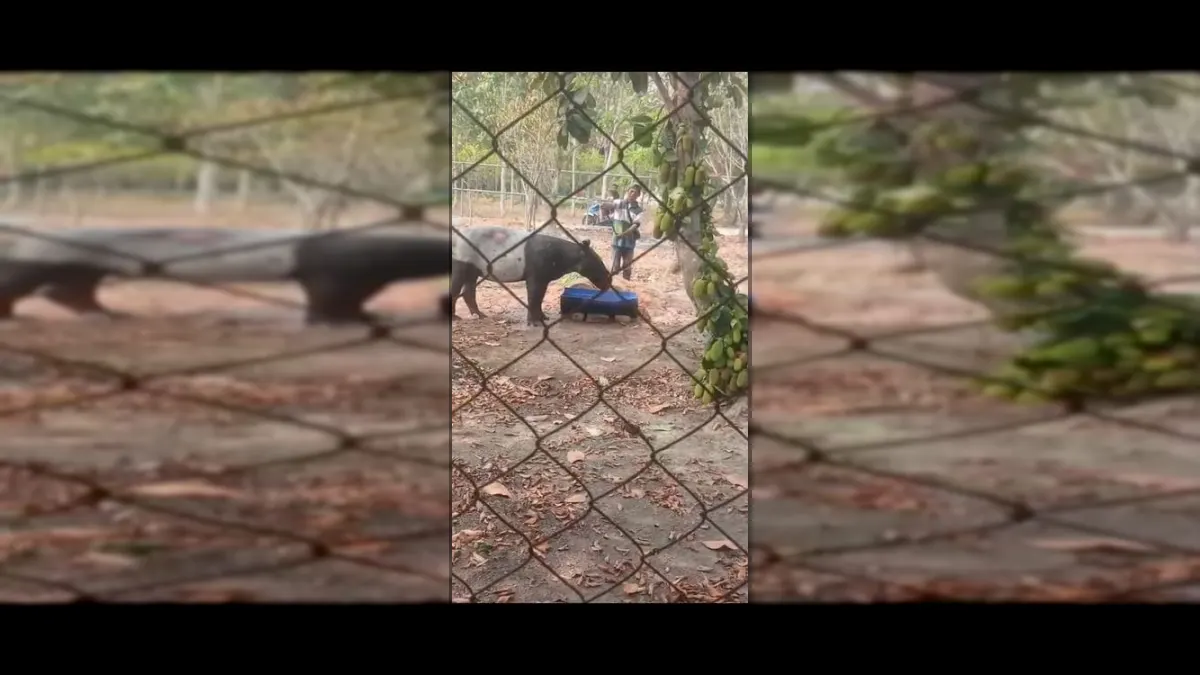
LAMPUNG, GARISBUMI.com – An Asian tapir (tapirus indicus) was found trapped in a water channel in the oil palm plantation area of PT Pematang Agri Lestari (PAL), Mesuji Regency, Lampung. The protected female animal was successfully evacuated and is now undergoing intensive care.
The evacuation was carried out by the Bengkulu Natural Resources Conservation Center (BKSDA) through the Natural Resources Conservation Section (KSDA) Region III Lampung together with the Mesuji Regency Government, the police, the company, veterinarians and the community.
Head of the Bengkulu BKSDA, Agung Nugroho, said that handling protected animals must be done carefully by prioritizing the health conditions and welfare standards of the animals.
"The Bengkulu BKSDA together with the parties have carried out the evacuation and initial treatment of the tapir. Currently the animal is still undergoing observation to monitor its health condition, behavior and the progress of the injuries it has experienced," said Agung in his official statement, Monday (21/9/2026).
According to him, the next treatment steps will be determined based on the results of observations and health examinations.
The tapir was first seen by PT PAL employees on Sunday (20/9/2026) at around 08.00 WIB. These animals move in plantation areas dominated by palm oil, rubber and bushes.
At around 10.00 WIB, the tapirs were still around the workers' location. The animal was seen looking for food and drink among the vegetation and palm oil piles.
However, at around 14.00 WIB, the tapir was found to have fallen into the water channel and was unable to get out on its own. The evacuation process then involved the KSDA Region III Lampung Section, Mesuji Regency Environmental Service, Mesuji Regency Agriculture and Livestock Service, Way Serdang District, Mesuji Police Department, PT PAL employees, and the surrounding community.
The location where the tapir was found is only about 800 meters from the Terbanggi Besar–Pematang Panggang–Kayu Agung toll road. This proximity is one of the considerations in the evacuation process because the movement of animals towards the toll road can endanger tapirs and road users.
Tapirs experience stress and abrasions
The initial examination was carried out by the KSDA team together with two veterinarians from the Mesuji Regency Agriculture and Livestock Service, namely Drh. Zainal Indrianto and drh. Vina Lusia Haryani.
The results of the examination showed that the female tapir was experiencing mild stress and had a number of abrasions on her legs, nape, back, right side of her stomach and mouth.
After being evacuated from the water channel, the tapir was able to stand and walk well. The initial examination also did not find any indication of a fracture.
However, further monitoring is still being carried out to ensure that the animal does not experience internal injuries or other health problems.
Officers have given vitamins to help the tapir's body recover and treat injured parts. After conditions allowed it to be moved, the tapir was placed temporarily in the Mesuji Regency Biodiversity Park.
The animal underwent intensive observation and care in an enclosure measuring approximately 2,000 square meters with a fence 1.6 meters high. This placement is carried out while considering the safety and welfare of the animals.
Release Still Under Review
Bengkulu BKSDA is still coordinating with the regional government and related parties to determine further treatment. Apart from the health of the tapir, the condition of the release location is also a concern.
The initial location of the discovery was in a plantation area and close to the toll road. Based on information from the sub-district government, there are also tenure conflicts around the location between the company and the community.
Therefore, new release plans can be carried out after the tapir is declared healthy and the destination location is assessed to meet ecological requirements and other technical considerations.
The decision to release will refer to the results of a veterinary examination and a comprehensive assessment of the animal's condition.
The Asian tapir is a protected wild animal based on Minister of Environment and Forestry Regulation Number P.106 of 2018. This animal is also listed in Appendix I of the Convention on International Trade in Endangered Species of Wild Fauna and Flora or CITES, so its international trade is strictly regulated.
Bengkulu BKSDA urges the public not to chase, catch or provide food carelessly to wild animals. People who find protected animals are asked to immediately report to the BKSDA or related agencies so that appropriate handling can be carried out.
Artikel ini merupakan siaran pers resmi yang diterbitkan melalui Meja Redaksi GARIS BUMI. Materi telah melalui peninjauan editorial untuk kenyamanan dan kejelasan informasi bagi pembaca.
Share Your Thoughts Editorial Moderation Required