
Abundant Plastic Waste, Indonesian Recycling Industry Still Imports Raw Materials
SURABAYA, GARISBUMI.com – Indonesia produces around 10.83 million tons of plastic waste every year. However, the abundance of waste generation is not yet able to meet the demand for raw materials for the domestic recycling industry.
The national recycling industry still has to import around 263 thousand tons of raw materials in 2024 to obtain materials with quality according to industry standards. At the same time, around 61 percent of domestic plastic waste has not been managed optimally.
This issue is of concern to the Ministry of the Environment/Environmental Control Agency (KLH/Environmental Management Agency (BPLH)) in strengthening the implementation of a circular economy and improving national plastic waste management.
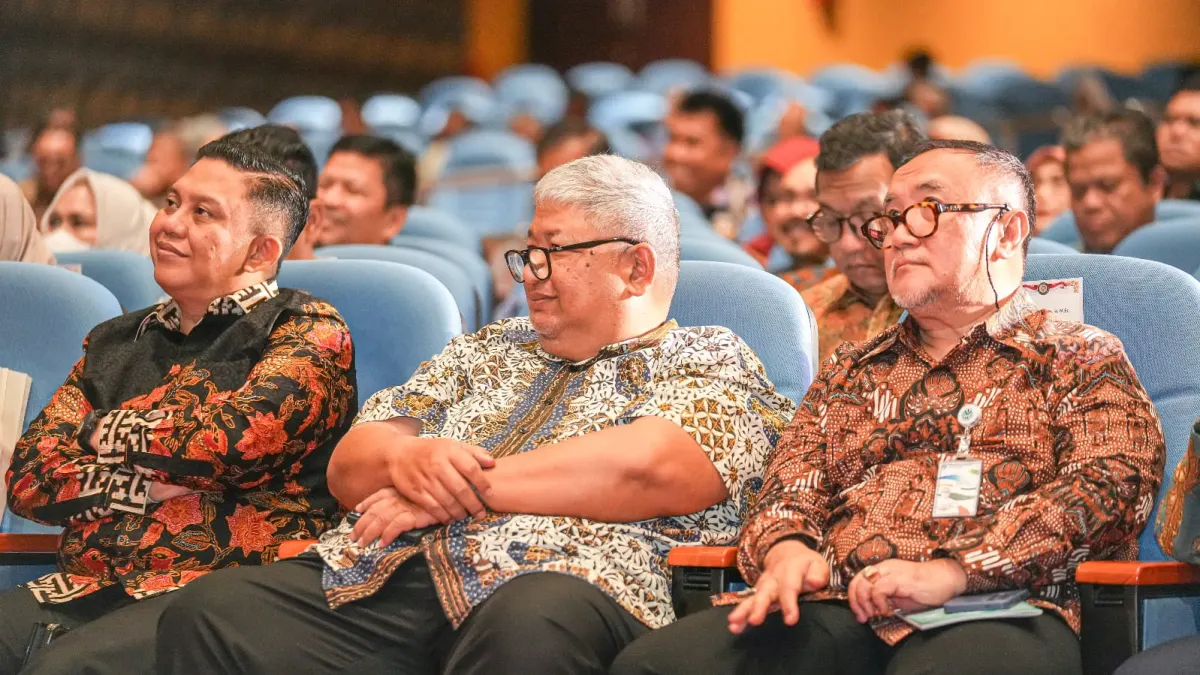
This commitment was conveyed in a National Seminar entitled "Circular Economy Principles and Legal Framework for Plastic Waste Management in Fulfilling Domestic Recycled Raw Materials Towards a Clean Indonesia" at Airlangga University, Surabaya, Thursday, September 24 2026.
Secretary of the Ministry of Environment and Forestry (KLH)/Main Secretary of Environmental Management Agency (BPLH), Rosa Vivien Ratnawati, emphasized that the circular economy should no longer be viewed simply as a technical choice for waste management.
"Circular economy is not just a technical choice in waste management, but a constitutional instrument. In its application, this is not a choice, but a necessity," said Rosa Vivien in front of the academic community and stakeholders.
New Recycling Capacity Used 48 Percent
Indonesia has 227 recycling companies with an installed capacity of 3.16 million tons per year. However, the capacity utilization rate is only around 48 percent.
This condition shows the gap between the amount of plastic waste generation and the availability of raw materials that meet industry standards.
Most of the plastic waste has not been sorted from the source. Garbage is also often mixed with food waste and other materials so that the quality decreases and cannot be used directly as recycling raw materials.
As a result, the industry faces a shortage of quality materials despite millions of tonnes of plastic waste being generated every year.
Three Barriers to the Plastic Recycling Industry
KLH/Environmental Management Agency (BPLH) identified at least three structural obstacles that are still hampering the strengthening of the national plastic recycling industry.
First, Indonesia does not yet have national quality standards that are binding for recycled plastic raw materials and are in line with industry needs.
Second, economic instruments are not yet strong enough to make recycled materials able to compete with new plastic or virgin plastic.
Third, the implementation of extended producer responsibility (EPR) is still voluntary and has not yet become an obligation accompanied by strict supervision and sanctions.
EPR requires producers to be responsible for the environmental impact of the products and packaging they produce, including after the product is used by the public.
KLH/Environmental Management Agency (BPLH) encourages EPR obligations to be clearly separated from the company's Social and Environmental Responsibility (TJSL) program. This separation is necessary to maintain transparency and ensure that producer responsibility does not stop at voluntary social activities.
Scavengers Supply 85 Percent Recycled Raw Materials
In the midst of these various limitations, the informal sector has become the main support for the Indonesian recycling industry.
Scavengers, collectors and waste banks are said to supply around 85 percent of the raw materials needed by the recycling industry. However, the majority of workers in the waste collection chain have not received business legality, social protection or adequate work standards.
The economic value of the plastic waste management chain also continues to increase at each processing stage. The value is estimated to reach around IDR 3 trillion in the initial collection stage.
After the waste is sorted, its value increases to around IDR 5.8 trillion. The economic value soared again to around IDR 10.9 trillion after the material was processed by industry.
The government considers that the informal sector needs to be integrated into the formal waste management system. Integration can be carried out through providing business legality, social protection, standardization of sorting, increasing capacity, and digitizing transactions.
Five Pillars for Improving Plastic Waste Management
To build a stronger recycling ecosystem, KLH/Environmental Management Agency (BPLH) encourages strengthening the legal framework through five main pillars.
These five pillars include binding cross-institutional regulations, EPR obligations with strict sanctions, standardization of recycled raw materials, integration of the informal sector, as well as the provision of fiscal and non-fiscal incentives and disincentives.
Director of Postgraduate School, Airlangga University, Prof. Achmad Chusnu Romdhoni, welcomed the research and policy recommendations discussed in the seminar.
"This research provides recommendations that require a process and time to implement, but are very possible to implement," said Achmad.
He believes that KLH/Environmental Management Agency (BPLH) has an important role in uniting the steps of the government, business world, academics and society in improving plastic waste management.
"With KLH/Environmental Management Agency (BPLH) as the orchestrator, I believe that in the future the management of plastic waste in Indonesia can be better," he said.
KLH/Environmental Management Agency (BPLH) emphasized that sorting waste from the source, strengthening the recycling industry, and integrating the informal sector will continue to be monitored to build a circular economy and support the realization of a Clean Indonesia.
The success of this policy is not only determined by the ability to process the waste that has been produced, but also by efforts to reduce the use of single-use plastic and strengthen producer responsibility from the product design stage.
Artikel ini merupakan siaran pers resmi yang diterbitkan melalui Meja Redaksi GARIS BUMI. Materi telah melalui peninjauan editorial untuk kenyamanan dan kejelasan informasi bagi pembaca.
Share Your Thoughts Editorial Moderation Required