IMPLI Project Ends, Peat Management in Three Provinces Continues until 2029
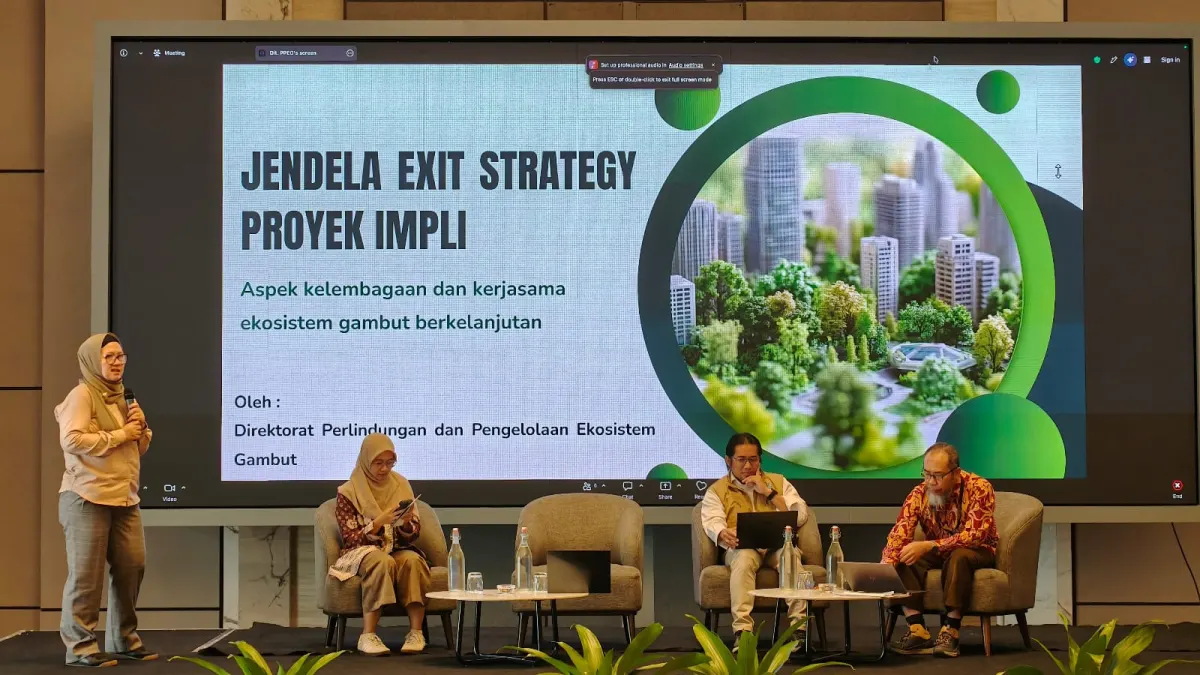
Continuous operation of tools and data updates are part of the post-project strategy, including to support early warning systems.
Six Pillars of Sustainability
IMPLI's sustainability strategy is structured through six pillars, namely governance and institutions; hydrology and peat ecosystem management; sustainable financing; monitoring, data, and technology; community inclusion and markets for peat-friendly products; and knowledge and replication.
In hydrological management, attention is paid to the operation of canal blocking, water monitoring tools, prevention of forest and land fires, as well as rewetting, replanting and revitalizing community livelihoods.
Meanwhile, financing is designed through a combination of various sources, including the APBN, APBD, Village Funds, company support, the Environmental Fund Management Agency, the economic value of carbon, and payments for environmental services.
Strengthening business groups and buyer networks is also part of the plan so that peat-friendly products have market access.

Joint Commitment until 2029
Post-project priorities are tailored to the needs of each province. In Riau, strategies include alignment with RPPEG for the 2026–2030 period, KHG-based water management, as well as developing market access and certification.
In Jambi, the focus includes alignment with RPPEG 2024–2053 Phase I, data sharing, environmental services-based financing, and strengthening village institutions and business groups.
Artikel ini merupakan siaran pers resmi yang diterbitkan melalui Meja Redaksi GARIS BUMI. Materi telah melalui peninjauan editorial untuk kenyamanan dan kejelasan informasi bagi pembaca.
Share Your Thoughts Editorial Moderation Required