
Bali Encourages Waste Sorting from Home, Traditional Villages Become Driving Force
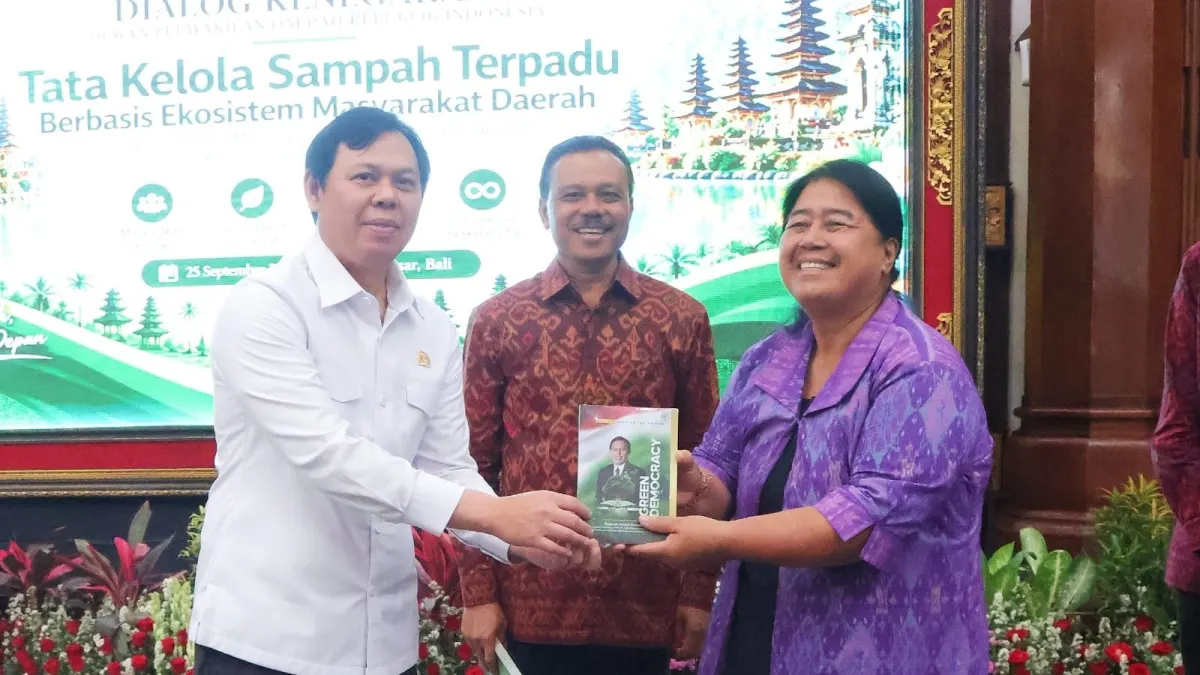
DENPASAR, GARISBUMI.com – The Bali Provincial Government is encouraging changes in waste management from the "collect, transport, dispose" pattern to reducing, sorting, processing, utilizing and handling residues. Households and traditional villages are placed as an important part of reducing the burden on final processing sites (TPA).
This policy direction was conveyed by Bali Province Regional Secretary Dewa Made Indra when reading Bali Governor Wayan Koster's remarks at the DPD RI State Dialogue at the Main Wiswa Sabha Building, Denpasar, Friday (25/9/2026).
The dialogue with the theme "Integrated Waste Management Based on Regional Community Ecosystems" discussed the division of roles between government and society in handling waste.
In his speech, Koster highlighted the increase in waste generation in line with population growth, economic development and tourism activities. This condition demands management starting from the source, including the household.
The government, according to Koster, cannot solve this problem on its own. The involvement of traditional villages, Balinese culture, business actors, the world of education, communities and society is needed so that waste sorting and reduction is consistent.
The Bali Provincial Government together with the district and city governments have made waste management a super priority program with the principle of "1 Island, 1 Pattern and 1 Governance for the sake of Nindihin Gumi Bali".
Traditional Villages Strengthen Waste Sorting Habits
Village and sub-district governments play a role in building awareness among residents to reduce and sort waste from home. Traditional villages help strengthen community discipline through awig-awig, pararem, mutual cooperation and local wisdom.
At the provincial level, the government carries out the functions of policy formulation, guidance, coordination and supervision. Regency and city governments translate this through waste management services, providing infrastructure, strengthening processing facilities, and transporting residues.
A number of policies form the basis for its implementation, namely Bali Gubernatorial Regulation Number 97 of 2018 concerning Limiting the Generation of Single-Use Plastic Waste and Bali Gubernatorial Regulation Number 47 of 2019 concerning Source-Based Waste Management.
Both were strengthened through Circular Letter Number 9 of 2025 concerning the Bali Clean Waste Movement. This movement carries the spirit of "My Village is Sustainable Without Plastic Waste" and "My Village is Clean Without Polluting Other Villages".
Processing Facilities Need Ongoing Support

Based on 2024 data presented in the speech, Bali has 292 reduce, reuse, recycle (TPS3R) waste processing sites and seven integrated waste processing sites (TPST).
The existence of these facilities needs to be supported by strong institutions, human resources and sustainable financing. Residents' consistency in sorting waste is also needed to support processing.
Source-based management is also directed at building a circular economy. Organic waste can be processed into compost, while inorganic waste with economic value is reused or recycled.
Waste banks, TPS3R, BUM Desa, BUPDA, community groups and business actors are expected to be involved in this ecosystem.
Koster emphasized five aspects to strengthen Bali's waste management system: regulatory consistency, institutional strengthening, changes in community behavior, multi-party collaboration, and management connectivity from upstream to downstream.
Meanwhile, Chairman of the DPD RI Sultan Baktiar Najamudin assessed that environmental quality must be a measure of the success of Bali's development, along with the achievements of the tourism sector.
"Bali's success is not only measured by the number of tourists, but is assessed by the condition of cleanliness and availability of clean water and healthy air," said Sultan.
He emphasized the importance of collaboration between the central and regional governments to realize a green parliament, green government, and environmentally sound waste management.
Artikel ini merupakan siaran pers resmi yang diterbitkan melalui Meja Redaksi GARIS BUMI. Materi telah melalui peninjauan editorial untuk kenyamanan dan kejelasan informasi bagi pembaca.
Share Your Thoughts Editorial Moderation Required