Deputy Minister of Environment Says 43 Landfills Are Burned, Encourages Waste Sorting from Home
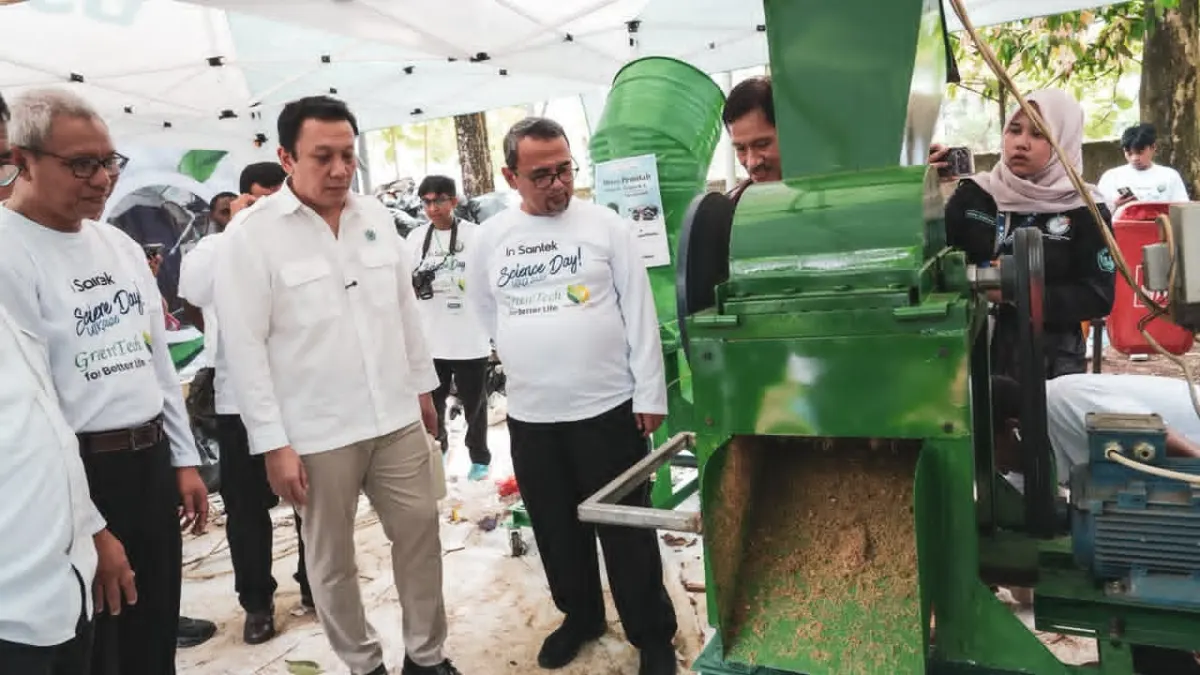
BOGOR, GARISBUMI.com – Deputy Minister of the Environment/Deputy Head of the Environmental Control Agency (KLH/Environmental Management Agency (BPLH)) Diaz Hendropriyono said that 43 final processing sites (TPA) had experienced fires. He emphasized the importance of sorting waste from source to reduce the risk of fire while supporting waste processing.
Diaz made this statement at the Science Day 2026 event at Ibn Khaldun University, Bogor, Wednesday (30/9/2026).
According to Diaz, the accumulation of organic waste mixed with plastic and dry weather conditions can increase the potential for fires in landfills.
"Currently, 43 landfills have caught fire, this is because there is no proper sorting, so organic waste piles up there, especially if it is mixed with plastic materials," said Diaz in a written statement from KLH/Environmental Management Agency (BPLH), Thursday (1/10/2026).
This statement does not specify the location or period of the fires at the 43 landfills that Diaz mentioned.
He hopes that sorting can reduce the waste that goes to landfill so that the facility primarily accepts the residue left after the processing process.
Community Becomes Driver of Waste Sorting
Diaz considers community involvement important to build the habit of sorting waste. Socialization needs to reach sources of income, including households and business actors.
"Community-based activities can encourage waste sorting upstream, it must start with community-based outreach," he said.
According to Diaz, this movement is needed so that sorting becomes a daily practice. Without community involvement, the waste problem will be difficult to solve.
He also emphasized that innovation in waste processing needs to be supported by materials that have been sorted. This applies to household waste as well as waste from hotels, restaurants and cafes or the leisure sector.
"So whatever way we want to do it, without upstream sorting, it won't be possible," said Diaz.

Wet Waste Becomes PSEL's Challenge
On this occasion, Diaz highlighted the processing of waste into electrical energy (PSEL) which is being encouraged by the government. According to him, sorting plays an important role in maintaining the quality of the waste supply, especially the water content.
Diaz said mixed waste can have a water content of up to 60-70 percent. He considered this condition to be a challenge to the effectiveness of processing.
"PSEL without sorting, the waste will become very wet, mixed, the water content will be very high, namely 60-70%, whereas effective PSEL requires waste with a water content below 30%," he said.
This figure is Diaz's explanation in his speech. The KLH/Environmental Management Agency (BPLH) statement does not yet specify the type of PSEL technology or the technical basis for the water content limits in question.
The main message conveyed by Diaz was the need to link sorting at the source with downstream processing. Waste management technology needs to go hand in hand with changes in people's habits in handling the waste they produce.
Science Day 2026 was also attended by Assistant for Economics and Development at the Bogor City Regional Secretariat Hanafi, Chancellor of Ibn Khaldun Mujahidin University, Chair of the Academic Senate Didin Hafidhuddin, Secretary General of Science and Technology of the Ministry of Higher Education Saintek Samsuri, and Deputy Secretary of the Ibn Khaldun Bogor Islamic Education Foundation Aftaf Muhadjir.
Artikel ini merupakan siaran pers resmi yang diterbitkan melalui Meja Redaksi GARIS BUMI. Materi telah melalui peninjauan editorial untuk kenyamanan dan kejelasan informasi bagi pembaca.
Share Your Thoughts Editorial Moderation Required