Mbah Warso, Protecting Mangroves to Keep the Anchor Coast Breathing
GARISBUMI.com – Among the mangrove roots sticking out of the mud, mangrove crabs move around looking for food. Small fish swim among the submerged roots, while hundreds of herons perch and nest on the branches.
This view grows in the Pasir Mendit mangrove area,ANGKAran Village, Kapanewon Temon, Kulon Progo Regency, Special Region of Yogyakarta. The coastal area, which is now home to various animals, does not exist by itself. There are the hands of residents who have planted, embroidered and cared for the mangroves for years so that they continue to grow.
One of the hands who faithfully carried out this work was Warso Suwito's. Local residents are more familiar with calling him Mbah Warso.
He may no longer be young, but his concern for the coastal environment has not aged. Together with the Wana Tirta Group, Mbah Warso protects the mangrove area while caring for life that depends on this ecosystem.
For Mbah Warso, planting mangroves is not just about putting seeds in the mud. Planted seeds must be monitored. Dead or drifting plants need to be replaced. Mangroves that are starting to grow must be cared for so they can withstand changes in tides, waves, rubbish and various other disturbances.
The job demands patience. The results cannot be seen in a matter of days. Mangroves need time to put down roots, raise their stems and form natural fortresses along the coast.
Caring for Life on 20 Hectares of Land
Mbah Warso does not work alone. He moved with the Wana Tirta Group which had around 20 members.
The group manages a mangrove area of approximately 20 hectares. Various types of coastal plants live in it, including Rhizophora, Avicennia, Sonneratia, Acrostichum, Acanthus, and nipah.
Each plant has a role in forming coastal ecosystems. The mangrove root network helps retain mud and sediment, absorbs wave energy, and reduces the risk of abrasion. The dense trees also provide living space and food sources for various animals.
In the upper part of the forest, egrets use mangrove branches as a place to nest and breed. Fish-eating birds and other small animals also arrive.
Meanwhile, the lower part of the forest is never completely quiet. Mud crabs, small fish and various aquatic life move among the roots. Their presence forms an interdependent chain of life.
Birds need fish and small animals as food. Fish need mangrove roots as a place to shelter and grow. Meanwhile, humans need coastal areas that remain healthy to protect living space and support livelihoods.
Therefore, when Mbah Warso and Wana Tirta members look after a mangrove, what they are looking after is not just the plants. They also guard the homes of various living creatures.
Don't Stop at Mangrove Planting
Mbah Warso and the Wana Tirta Group's attention is not limited to mangroves. They are also involved in turtle conservation and hatchling care.
Hatchlings are baby turtles that have just hatched and must face a dangerous journey to the sea. Not all of them are able to survive. The threat of predators, changes in beach conditions, trash, human activity, and artificial light can disrupt the journey.
Through conservation activities, community groups help ensure that the turtle life cycle continues.
This activity shows that preserving coastal areas cannot be done in isolation. Protecting mangroves means caring for the habitat. Protecting sea turtles means maintaining the balance of marine life. Cleaning the environment means reducing threats to the animals that live in it.
All of this work is brought together by one goal, namely to keep the coast of Tanjangran so that it remains a healthy living space.
Mangroves that Provide Economic Value
The Wana Tirta group also tries to show that environmental preservation can go hand in hand with community empowerment.
A number of types of mangrove plants are processed into products of economic value. Sonneratia fruit, for example, is used as an ingredient in making syrup. Acanthus leaves are processed into chips.
This processing means that mangroves are not only seen as rows of trees on the edge of the water. Mangroves can be a source of knowledge, livelihood and added value for the community, as long as they are used wisely.
This kind of approach is important so that residents have stronger reasons to protect the area. When a healthy ecosystem provides direct benefits, conservation is no longer considered a burden, but rather a shared investment.
However, economic benefits do not mean that forests can be exploited without limits. Sustainability remains key. Raw materials must be taken taking into account the plant's ability to grow and develop again.
Mangrove Forest Becomes Learning Space
The area managed by Wana Tirta is now not only a place for mangroves to grow and animals to thrive. The area has also been turned into an open study space.
The Wana Tirta Group collaborates with schools, universities, the Ministry of Maritime Affairs and Fisheries, the Natural Resources Conservation Center, and a number of other institutions.
Students and students come to take part in internships, research and mangrove management surveys. They also learned about turtle conservation and how to care for hatchlings.
In that place, lessons about the environment are not only received through books. Visitors can see firsthand how mangrove roots hold mud, how birds build nests, and how crabs and small fish live under the dense trees.
Knowledge becomes easier to understand because ecosystems can be seen, touched and observed directly.
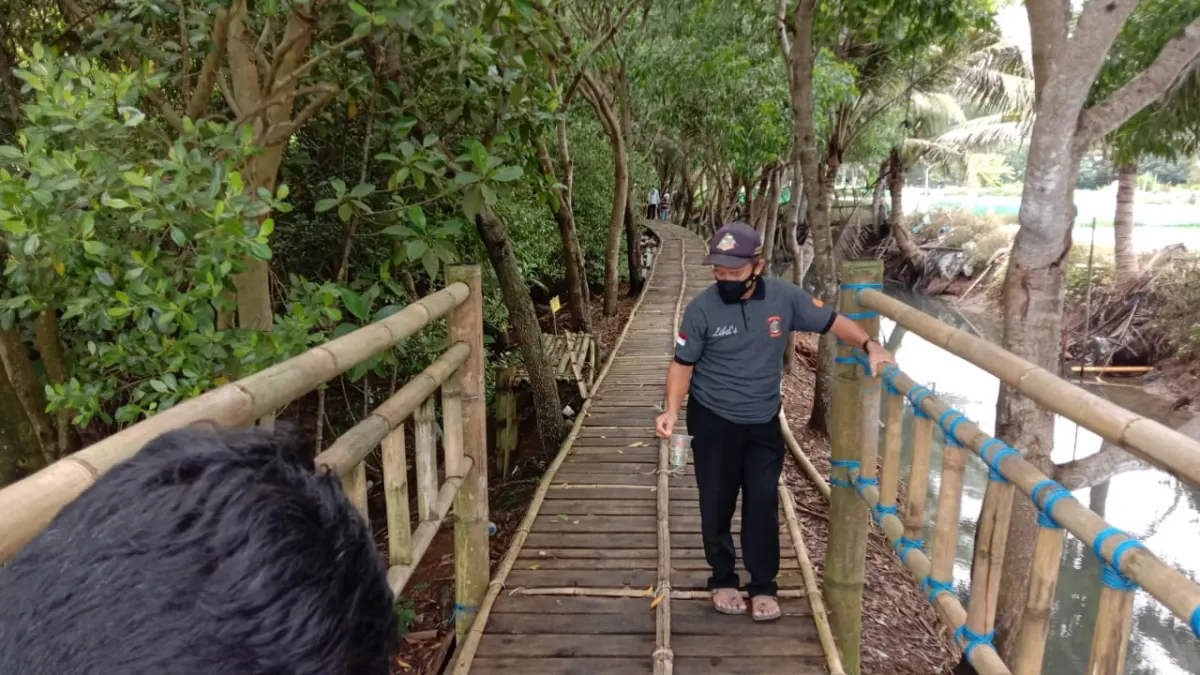
In 2022, the Wana Tirta Group received assistance to build a 152 meter track from the Directorate General of Marine Spatial Management, Ministry of Maritime Affairs and Fisheries.
The track was built to make it easier for people to explore the area without destroying the mangrove habitat. Its existence also provides added value for environmental education activities and tourist visits.
Keeping What Has Grown
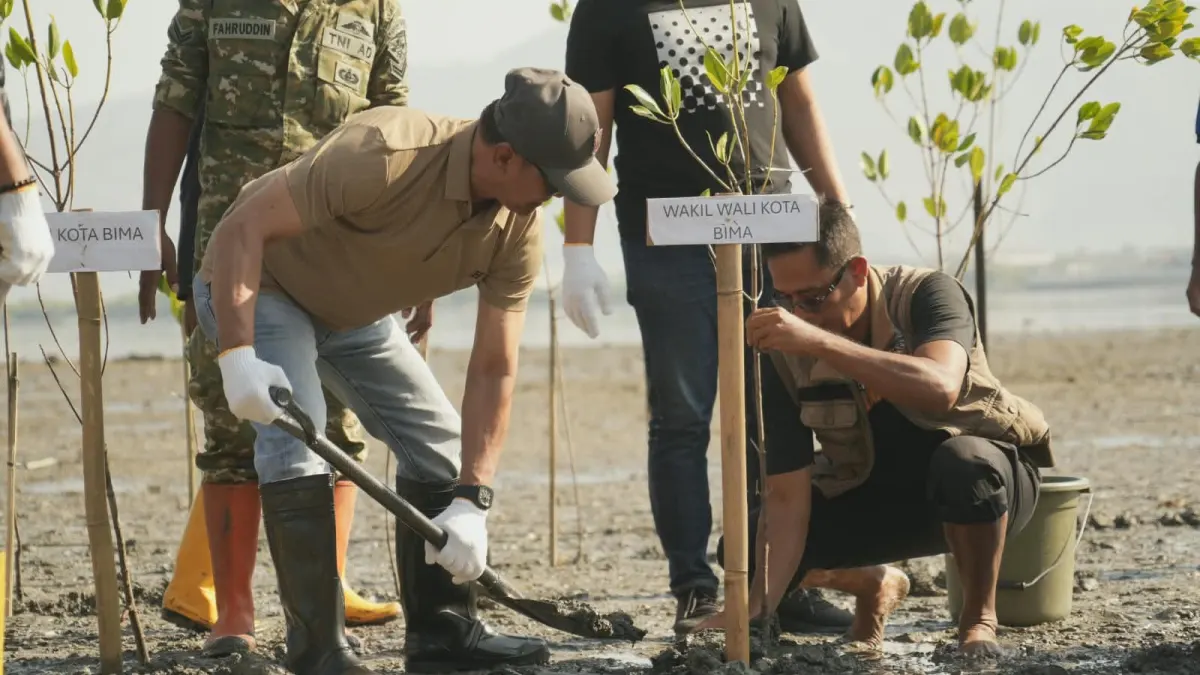
Planting mangroves is often an activity that attracts attention. People come, bring seeds, and plant them together. However, the real work begins after the planting event is complete.
Seedlings must be inspected. Damaged plants need to be replaced. Trash stuck must be cleaned. The area needs to be maintained so that the planted mangroves actually grow into forests.
That is the long work that Mbah Warso and the members of the Wana Tirta Group have undertaken.
From their hands, muddy areas grew into homes for birds, fish, crabs and various coastal plants. Mangroves provide protection, knowledge and economic opportunities for the surrounding communities.
Mbah Warso may not talk much about big terms such as climate change mitigation or sustainable development. However, what he did explained all that in the simplest way.
He plants what is lost, replaces what dies, cares for what grows, and keeps life on the Tanjungran coast going.
Artikel ini merupakan siaran pers resmi yang diterbitkan melalui Meja Redaksi GARIS BUMI. Materi telah melalui peninjauan editorial untuk kenyamanan dan kejelasan informasi bagi pembaca.
Share Your Thoughts Editorial Moderation Required