
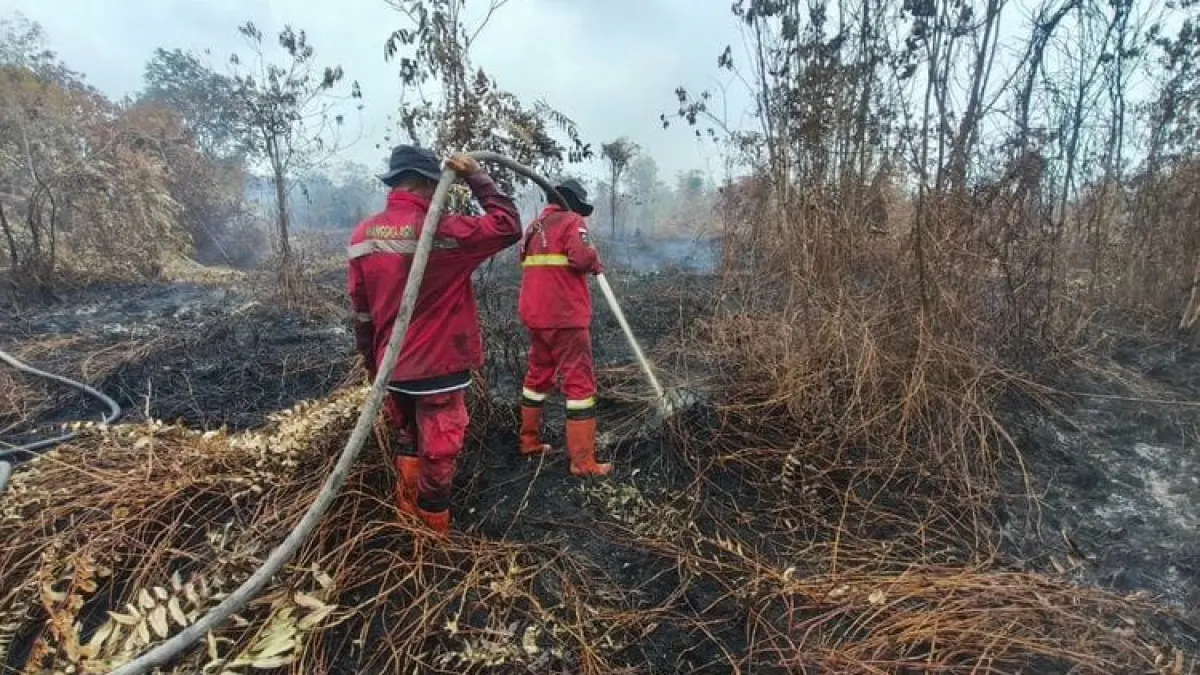
National Hotspots Jump to 932, Central Kalimantan (Kalteng) Records 643 Spots

This condition shows that handling forest and land fires cannot only be based on the number of Hotspots. The government must also monitor fire conditions in the field, PM2.5 concentrations, smoke distribution, air humidity, wind direction, chance of rain and visibility.
BMKG predicts that there is an opportunity for Cumulonimbus cloud growth from 23 to 29 September 2026 in a number of areas of Sumatra and Kalimantan.
These regions include Central Kalimantan (Kalteng), West Kalimantan (Kalbar), South Kalimantan, Riau, Jambi and South Sumatra (Sumsel). Weather information is one of the considerations in implementing OMC and air operations.
Residents Asked to Be Aware of Smoke Impact
The Ministry of Forestry urges people in affected areas to monitor air quality information and follow local government directions.
If air conditions worsen, people are advised to reduce outdoor activities and use masks if they have to do activities outside the home.
Special attention needs to be given to children, pregnant women, the elderly, and people who have respiratory problems or chronic diseases.
The public and business actors are also asked not to clear or clear land by burning. Every area manager is obliged to ensure the readiness of personnel, facilities, early detection and fire control systems.
Artikel ini merupakan siaran pers resmi yang diterbitkan melalui Meja Redaksi GARIS BUMI. Materi telah melalui peninjauan editorial untuk kenyamanan dan kejelasan informasi bagi pembaca.
Share Your Thoughts Editorial Moderation Required