
When Emil Salim Brings the Environment to the Heart of Development
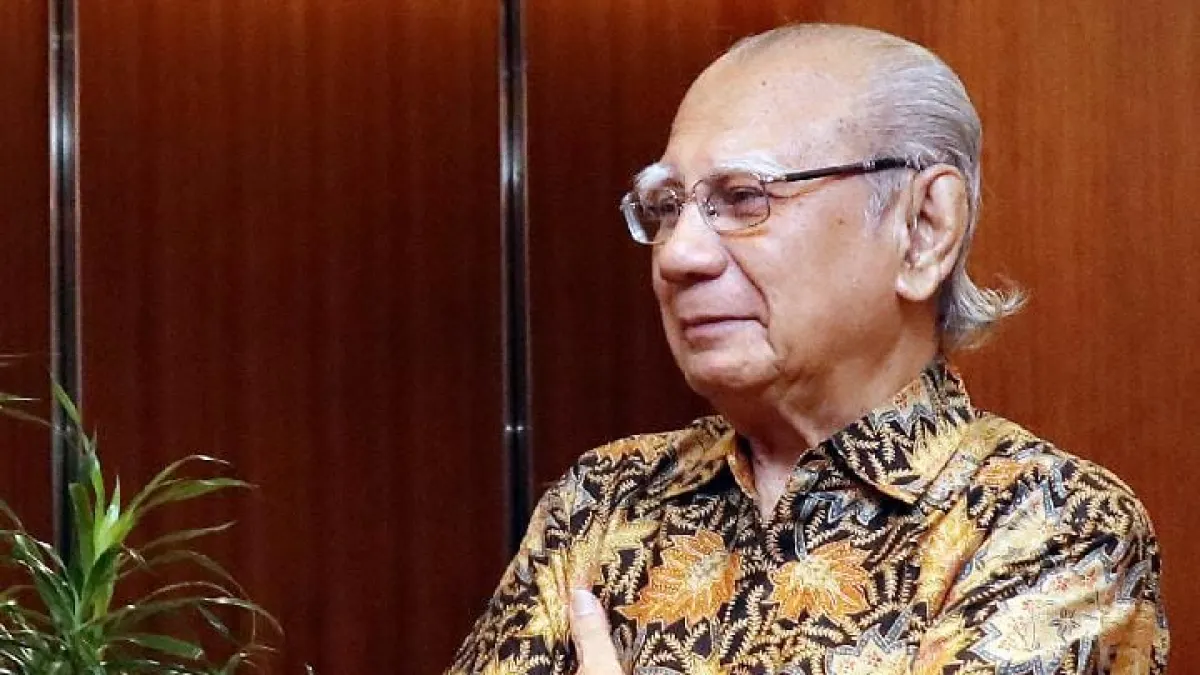
GARISBUMI.com – Emil Salim helped put the environment at the heart of the country's development policy. From the birth of the AMDAL framework to the idea of sustainable development, its influence is still felt today.
In 1978, when Emil Salim was appointed Minister of State for Development and Environmental Supervision, Indonesia did not yet have an established way to deal with environmental problems.
Almost everything has to start at the same time. The public needs to be convinced, institutions must be formed, knowledge gathered, while the rule of law is still very limited.
The challenge is not small. Indonesia's development is moving fast. Industry grew, forests were cleared, mines expanded, cities developed, and various infrastructure projects were built in many areas.
Development success is easy to demonstrate. There are new buildings, longer roads, dams, factories, and economic growth figures that can be announced every year.
Environmental damage works differently. It often comes slowly and is barely audible.
The river water changes color little by little. Forest cover is shrinking year by year. The air around industrial areas is getting harder to breathe. People only really realize the consequences when rice fields are no longer productive, water sources disappear, or diseases begin to emerge.
In the midst of the great enthusiasm for pursuing growth, Emil Salim brought an idea that at that time had not yet gained much traction: development should not only count on what is gained, but also what is sacrificed.
He understands that nature will not be protected if we only rely on moral advice and appeals. Environmental protection must be included in state regulations, planning and decision-making processes.
Considering the Impact Before the Project Runs
One of the important milestones in the history of Indonesian environmental policy is the birth of Law Number 4 of 1982 concerning Basic Provisions for Environmental Management.
This law is the initial basis for the state to regulate the environment more comprehensively. It begins to emphasize the right to a good and healthy environment, responsibility for pollution, and the importance of analyzing the impact of an activity.
This framework was then strengthened through Government Regulation Number 29 of 1986 concerning Environmental Impact Analysis. These regulations came into effect on June 5 1987 and became the basis for implementing AMDAL in a more structured manner in Indonesia.
Through AMDAL, business plans or activities that can have important impacts are not sufficiently assessed based on economic benefits and technical feasibility. The impact on water, air, land, ecosystems, health and people's lives must also be studied.
The basic idea is simple, but important: damage must be predicted before it occurs.
Don't wait for rivers to be polluted to think about waste. Don't wait for residents to lose their living space to discuss social impacts. Don't wait for the forest to run out before calculating the ecological losses.
The AMDAL should be a tool for testing a plan, not just a pile of documents that is saved after a permit is issued.
Along the way, these dreams do not always come true. AMDAL is often criticized for turning into an administrative formality. There are documents that were prepared without adequate community participation. There are also recommendations that are good on paper, but weak in field monitoring.
This criticism remains relevant today. However, the weakness of implementation does not erase the importance of the foundations built at that time.
AMDAL introduces a fundamental principle: the owner of the activity must not only enjoy economic benefits, while the environmental impact is borne by the community.
The Environment Is Not a Cleaner
Emil Salim doesn't want environmental agencies to just be officers who come after the damage has occurred.
If a river has been polluted, a forest has been cleared, or a village has been submerged due to changes in the landscape, the costs of restoration are much greater. In many cases, things cannot even be returned to normal.
Therefore, the environment must be discussed since a project is still on the planning table.
This point of view is not always easy to accept. Each sector has its own targets. Industry pursues production, mining pursues mining results, public works builds infrastructure, while regions need investment and employment opportunities.
In the midst of these various interests, environmental matters are easily seen as an obstacle.
Emil Salim actually saw it from the opposite direction. Protecting the environment does not mean stopping development. Nature protection is needed so that the results of development are not used up to pay for floods, pollution, land conflicts, water crises and damage to public health.
Polluted rivers don't stop at the boundaries of a factory. Forest destruction can trigger floods and landslides far from logging sites. Mining waste can also move with water flows and affect the lives of people in other areas.
That is why environmental problems cannot be solved by one ministry alone.
Emil encourages a cross-sector approach and involves universities and community groups. Scientific knowledge is needed to read the impacts of development. Meanwhile, residents need to be heard because they are the ones who live closest to environmental changes on the ground.
The government has authority. Academics have knowledge. Business actors control economic activities. However, communities are often the first to notice when the water begins to change, the fish disappear, the air deteriorates, or the land no longer produces fruit.
Poverty and Natural Destruction
One of the strengths of Emil Salim's thinking is his ability to see the environment as a human problem.
Natural damage does not affect everyone with the same consequences.
People who have money may still be able to buy clean water when wells are polluted. They may move when the environment is no longer comfortable. They also have better access to health services.
Poor people do not always have such choices.
When forests are damaged, local communities can lose sources of food, firewood, medicinal plants and livelihoods. When rivers are polluted, residents who cannot afford clean water bear the greatest risk. When abrasion erodes coastlines, small fishermen are at the forefront of the threat.
Therefore, environmental protection cannot be separated from efforts to overcome poverty and inequality.
Policies that only prohibit people from using forests, but do not provide livelihood options, can give rise to new problems. On the other hand, economic development that ignores people's rights can increase conflict and accelerate natural destruction.
The environment and poverty are not two independent problems. The two meet in the daily lives of people who depend on land, water, forests, coasts and seas for their livelihoods.
This view then becomes an important part of discussions about sustainable development.
Bringing the Indonesian Experience to the World
Emil Salim's thinking does not stop at home. He became a member of the World Commission on Environment and Development, better known as the Brundtland Commission.
The commission brings together figures from various countries to answer a problem that is increasingly difficult to ignore: how can the world continue to develop without depleting the resources needed by the next generation?
In 1987, the commission published the report Our Common Future. The report reinforces the concept of sustainable development, namely development that meets the needs of the present without compromising the ability of future generations to meet their needs.
In the forum, Emil brought experiences from developing countries.
Indonesia and other developing countries still need economic growth to reduce poverty, provide education, create jobs and build infrastructure. However, they also must not repeat the development patterns of industrial countries that drain resources and leave behind pollution.
This is not a simple choice between development and the environment.
The problem is how to build without destroying the very basis of life that is needed for development to survive.
Emil's involvement in the Brundtland Commission shows that Indonesia is not only a recipient of environmental ideas from other countries. Indonesia is present in global conversations that help shape the direction of world development.
Unfinished Struggle in the Cabinet
Emil Salim handled environmental affairs in government until 1993. However, the end of his term of office did not make him stop talking about the future of the earth.
He is again active in the academic world, civil society organizations, and various national and international forums. From these spaces, Emil continues to remind us that sustainable development must not stop being a term in official speeches and documents.
Because, the real problem always lies in implementation.
An AMDAL can be made, but are citizens' voices truly heard? Rules may be issued, but are violations prosecuted? Governments can talk about green growth, but are forests, rivers, coasts and people's living spaces really protected?
Those questions are still alive today.
Emil Salim's traces are not only found in the names of institutions, regulations or international forums that he has participated in. This trail also lies in a change of perspective: the environment is not a peripheral concern nor is it an obstacle to development.
The environment is the basis that determines whether development can survive or collapse due to the consequences of its own creation.
After no longer being a minister, Emil Salim chose to remain standing in the same place. He continues to remind the government, business world, academics and society that the earth is not inherited to be consumed by one generation.
However, big ideas always face tests when they meet economic interests and power. That's where Emil Salim's legacy becomes important: not just to be remembered, but to be continued and, if necessary, fought for again.
Continue to Part 3: Emil Salim's Legacy and Message to the Generation of Guardians of the Earth
Share Your Thoughts Editorial Moderation Required