
BRIN Strengthens Research on Small Islands to Face Ecosystem Change
JAKARTA, GARISBUMI.com – The National Research and Innovation Agency (BRIN) is strengthening research on a number of small Indonesian islands to map pressure on ecosystems, the impact of human activities, as well as ocean dynamics and climate change.
Through the Small Island Research and Development (SIRaD) program, the results of this research are aimed at becoming a scientific basis for formulating sustainable small island development policies. Research is also expected to strengthen the resilience of the people who live and depend on the archipelago for their livelihoods.
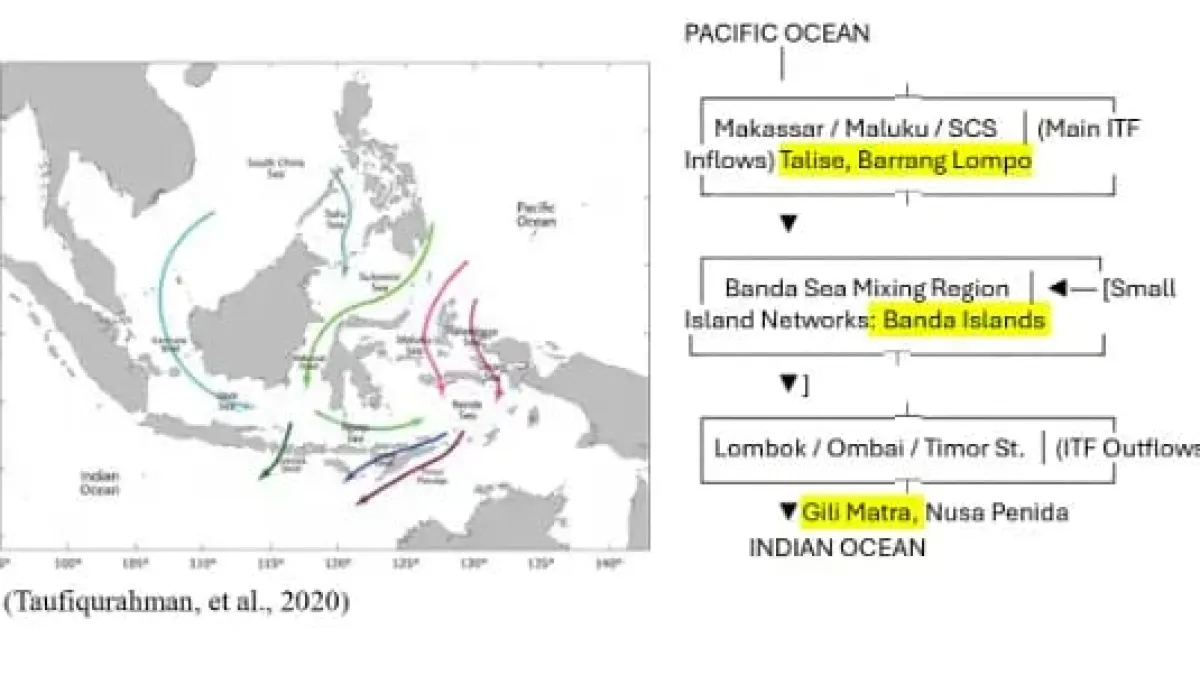
Research was developed on Pari Island, Talise in North Sulawesi, Barang Lompo, Banda Islands, and Gili Matra. Each location has different ecological and socio-economic problems.
BRIN Principal Expert Researcher Zainal Arifin said small islands cannot be viewed as independent regions. Conditions are not only influenced by human activities at the local level, but also climate change and regional marine dynamics.
This influence is even stronger on the islands located along the Indonesian Throughflow (Arlindo) corridor. Arlindo is the movement of water masses from the Pacific Ocean to the Indian Ocean which passes through Indonesian waters.
Therefore, small island research requires a cross-disciplinary approach. Ecological conditions need to be studied together with the social and economic life of the community so that research results can answer development needs.
"SIRaD was built to encourage interdisciplinary collaboration, increase community involvement, support science-based policies for sustainable small island development, and strengthen regional cooperation in the Western Pacific," said Zainal at The 3rd Scientific Symposium of Cooperative Study of Kuroshio 2 in Jakarta, Tuesday (15/9).
Each Island Faces Different Pressures
BRIN found that each small island has different characteristics and environmental pressures. Therefore, research and policy approaches cannot be uniform.
On Pari Island, research is focused on ecological change and community resilience amidst increasing pressure from tourism activities. Research views environmental change and society's ability to deal with stress as two interrelated issues.
Meanwhile, research in Talise, North Sulawesi, is aimed at understanding the pressure on the ecosystem due to human activities, including uncontrolled aggregate extraction.
A more complex problem was found in Lompo Goods. BRIN's research in the region covers water management, aquaculture activities, space use conflicts, and tourism development.
The Banda and Gili Matra Islands are also locations for research development with their respective characteristics of ecological and socio-economic problems.
This diversity shows that small island development needs to be structured based on the conditions of each region. Policies that are successfully implemented on one island are not necessarily suitable for use on other islands.
Through SIRaD, BRIN connects ecological, social and economic studies with community involvement. It is hoped that this approach will ensure that research results do not stop as scientific reports, but can be used in policy formulation.
Small Island Research Supports Blue Food Economy
In the future, small island research will also be directed at supporting the development of a blue food economy. One of the focuses is the development of sustainable aquaculture and providing direct benefits to local communities.
BRIN is also preparing a marine ecosystem health monitoring system, biodiversity research, compiling sediment quality indices, and collecting data into marine repositories.
This agenda is part of strengthening small island research until 2028–2029. Data regarding ecosystem conditions, human activities, climate change and the socio-economic life of society will be collected as a scientific basis for development.
Through SIRaD, BRIN hopes that research can provide a more complete picture of the changes occurring on Indonesia's small islands. The results are also expected to strengthen regional research cooperation in the Western Pacific region.
Share Your Thoughts Editorial Moderation Required