
BRIN Develops Cassava Starch-Based Forest and Land Fire Retardant
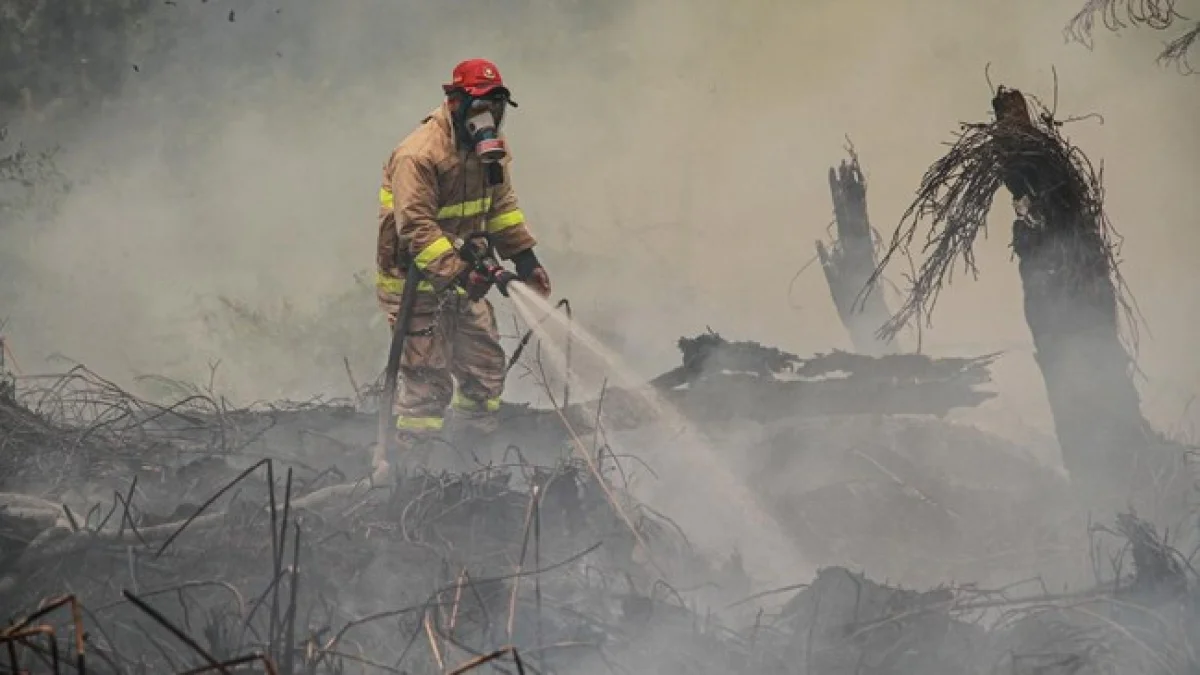
JAKARTA, GARISBUMI.com – The National Research and Innovation Agency is developing a cassava starch-based retardant material to help handle forest and land fires. The technology, called CASSA-P, is designed to support blackouts, not a replacement for all methods of handling forest and land fires that have been used so far.
BRIN explained this technology on August 27 2026 in the midst of efforts to find materials and methods that can increase the effectiveness of water use in controlling vegetation fires.
BRIN Molecular Chemistry Researcher Julinton explained that cassava starch is not used as dry flour which is spread directly onto the fire.
The starch is chemically modified and then formulated with water, ammonium polyphosphate or APP, and a wetting agent in low concentrations.
The way it works combines several mechanisms. Water functions to absorb heat and reduce fuel temperature. Modified cassava starch helps the liquid stick and stay longer on the surface of the vegetation, while the wetting agent helps the liquid spread and wet the fuel.

When receiving heat, APP helps form a layer of solid carbon or char on the material. This layer has the potential to inhibit heat transfer and slow the rate of fire spread.
BRIN sees CASSA-P as having the potential to be used through ground operations or precision spraying using drones. Its use can be directed at the initial fire point, spot fire, side of the fire, or to form a retardant path in vegetation that has not yet burned.
Share Your Thoughts Editorial Moderation Required